/icon.png)
/Rectangle%201.png) Planks
Planks
/Rectangle%201%20(3).png) Sterling
Sterling
/Rectangle%201%20(4).png) Skyline flush
Skyline flush
/Rectangle%201%20(5).png) Shoreline
Shoreline
/Rectangle%201%20(1).png) Overlay carriage house
Overlay carriage house
/Rectangle%201%20(9).png) Raised panel
Raised panel
.png) Stamped carriage house
Stamped carriage house
/Rectangle%201%20(2).png) Stamped shaker
Stamped shaker
.png) Full-view aluminium
Full-view aluminium
.png) Recessed panel
Recessed panel
/color-samples-icon%201%20(1).svg) Free color samples
Free color samples
/Residential%20home%20icon.svg) Compare doors
Compare doors


/Panel%20garage%20door%201.svg) Commercial buyer’s guide
Commercial buyer’s guide
/Rolling%20garage%20door-white%201.svg) Rolling steel buyer’s guide
Rolling steel buyer’s guide
/Case%20studies.svg) Case studies
Case studies
.svg) Compare doors
Compare doors
/Dealer%20Center.svg) Dealer center
Dealer center
/Architects%20corner.svg) Architect center
Architect center
/Build-a-door-icon-red-white%201.svg) DoorVisions
DoorVisions
/color-samples-icon%201.svg) Free color samples
Free color samples
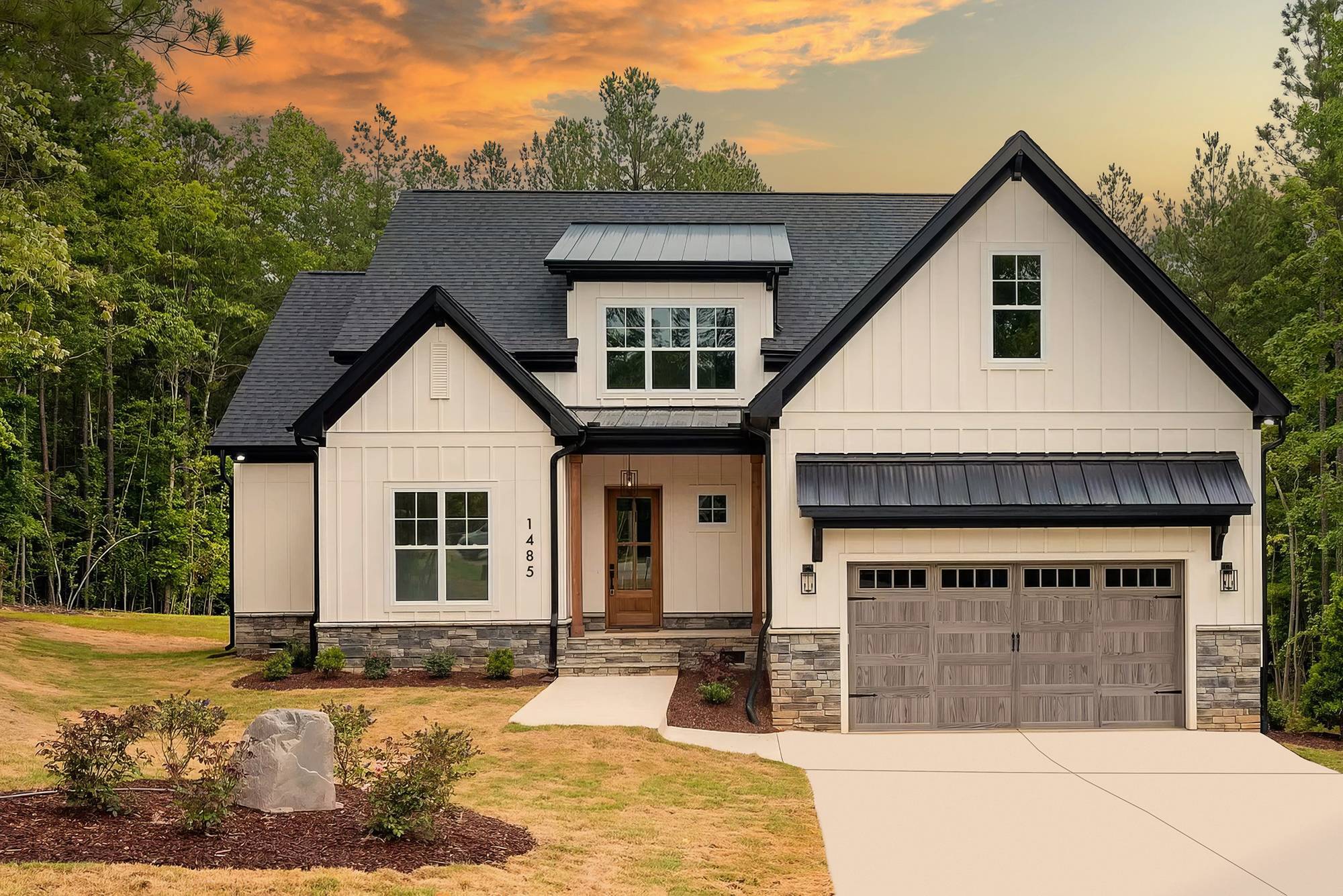
If you're specifying a garage door for a custom home build, C.H.I. Overhead Doors makes that decision inside one catalog rather than across several brands. Sterling offers the longest color list at 25 options, raised panel and stamped shaker each pair ten or nine solid colors with a matching woodtone set, and overlay carriage house is the only family available in real cedar or mahogany wood rather than a wood-look finish. This article compares seven C.H.I. door families side by side, on color range, construction, insulation, and warranty, so you can match one to the house you're building rather than to whatever a supplier has on the lot.
A garage door usually accounts for close to 30 to 40 percent of a home's visible façade, so on a new build it carries as much design weight as the siding or the front door. Because C.H.I. builds several distinct constructions rather than one profile in different colors, the harder decision isn't which brand to use, it's which of these seven families actually fits the architecture, the climate, and the finish you've already chosen for the rest of the house.
Below, we compare all seven, then walk through how to narrow the choice for a build that doesn't exist yet.
C.H.I. garage doors comparison for custom home builds
These 7 C.H.I. Overhead Doors garage door families are compared across construction, insulation, color range, and warranty, so you can weigh up which one fits a custom build.
| Door family | Construction (by model) | Insulation (by model) | Standard colors | Woodtones | Warranty (sections) |
|---|---|---|---|---|---|
| Planks | 2" 2-sided steel, 27 Ga (2358) | Polystyrene R-10.29 or polyurethane R-17.54 | 9 solid colors | 7 Accents Woodtones | Limited lifetime |
| Sterling | 2" 2-sided steel, 24 Ga (2717) | Polystyrene R-10.29 or polyurethane R-15.07 | 25 colors (paired with frameless tinted glass) | Not offered as a separate woodtone line | 5 years |
| Raised panel | 1 or 2-sided steel, 24 to 28 Ga depending on model | None, or polystyrene / polyurethane from R-7.94 to R-17.19 | 10 solid colors | 9 Accents Woodtones | Limited lifetime |
| Stamped shaker | 2-sided steel, 27 Ga on the insulated models | Polystyrene or polyurethane from R-7.94 to R-16.55 | 9 solid colors | 9 warm and textured woodtones | Limited lifetime |
| Stamped carriage house | 1 or 2-sided steel, 25 to 27 Ga depending on model | None, or polystyrene / polyurethane from R-7.94 to R-16.55 | 9 solid colors | 9 realistic woodtones | Limited lifetime |
| Overlay carriage house | 2-sided steel, fiberglass, or real cedar/mahogany wood, 25 or 27 Ga | Polystyrene R-10.29 to R-10.78, or polyurethane R-17.54 to R-18.03, by material | Solid colors including white, almond, sandstone, bronze, and black, plus two-tone options | Accents cedar and Accents mahogany, or real wood left unfinished for field staining | 3 years (steel/fiberglass), 1 year (real wood) |
| Skyline flush | 1 or 2-sided steel, standard or heavy duty | None, or polystyrene / polyurethane from R-7.94 to R-17.54 | 9 solid colors | 7 realistic woodtones | Limited lifetime |
1. Planks
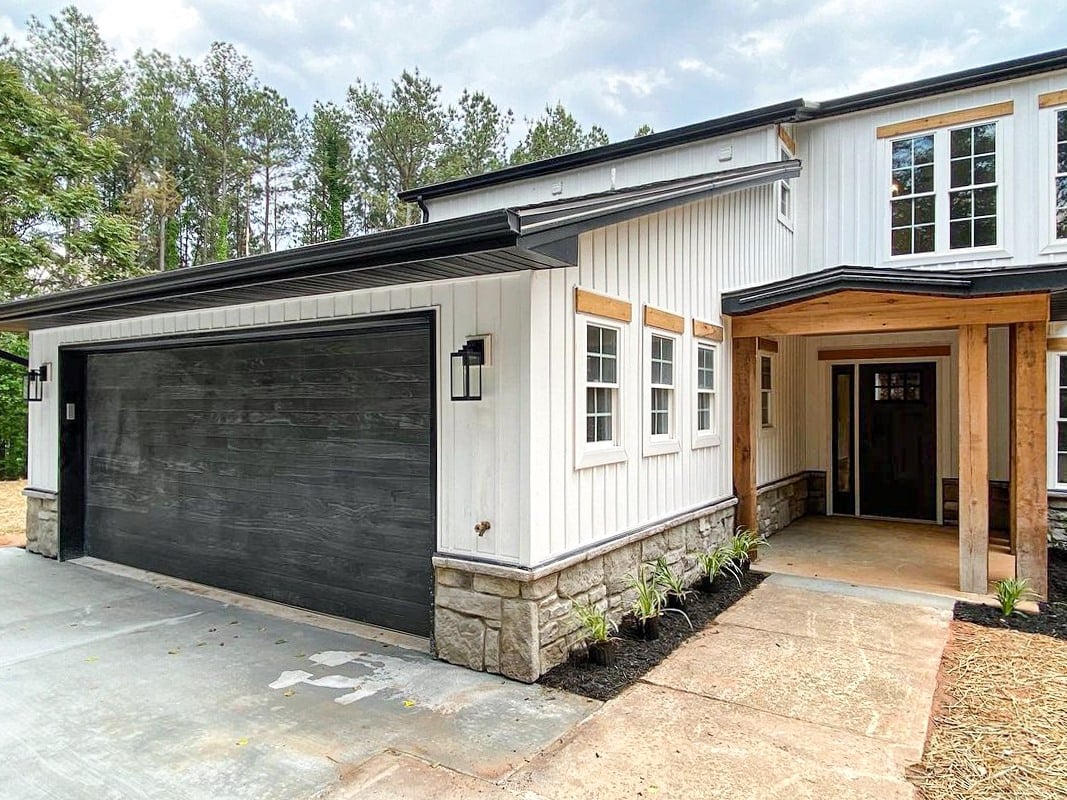
Planks is C.H.I.'s wood-look door, and it carries 9 solid colors alongside 7 Accents Woodtones, all applied over steel rather than real wood. The insulated 2358 model reaches R-17.54 on a 2-sided steel sandwich, 27 Ga, which suits an attached garage in a cold climate, while the uninsulated build fits a detached structure at lower cost. For a custom build, plank garage doors pair well with ranch, mid-century, and craftsman architecture, since the digitally printed grain reads as real wood at typical viewing distance without the upkeep of an actual wood door. Sections carry a limited lifetime warranty.
2. Sterling
Sterling is the minimalist option, combining flat steel panels with frameless tinted glass across 25 color choices, more than any other C.H.I. family. The 2717 model runs a polyurethane core at R-15.07 on 2-sided, 24 Ga steel, so the thermal performance holds up even with the glass. Sterling garage doors suit contemporary or mid-century builds where a flat, glazed profile fits the rest of the exterior. Sections carry a 5-year warranty, the one named exception to C.H.I.'s otherwise limited lifetime term.
3. Raised panel
Raised panel is C.H.I.'s traditional embossed profile, and it carries the widest combined palette of the seven: 10 solid colors and 9 Accents Woodtones. Construction spans the most gauges of any family, from 24 to 28 Ga, with R-values from 0 on the uninsulated build up to R-17.19 on the 2216/4216 polyurethane model. That range makes it easy to match the door's weight and thermal performance to the specific opening on a custom build rather than defaulting to one spec. Sections carry a limited lifetime warranty.
4. Stamped shaker
Stamped shaker has a subtler embossed profile than the carriage house doors, which suits homeowners who want a refined, contemporary-leaning look rather than heavy texture. It comes in 9 solid colors and 9 warm, textured woodtones. The insulated 2518 model reaches R-16.55 on a 2" 2-sided, 27 Ga build. Stamped shaker fits craftsman and farmhouse exteriors that want dimensional detail without the depth of a full carriage door. Sections carry a limited lifetime warranty.
5. Stamped carriage house
Stamped carriage house presses its crossbuck pattern directly into the steel rather than applying it as a separate overlay, which keeps the cost down while still reading as a carriage door from the street. It comes in 9 solid colors and 9 realistic woodtones. R-values range from uninsulated up to R-16.55 on the 5216/5916 polyurethane build. If you're considering carriage house garage doors for a farmhouse or craftsman build, this is the lower-cost route to the carriage look. Sections carry a limited lifetime warranty.
6. Overlay carriage house
Overlay carriage house is the only C.H.I. family available in a genuine wood face, real Western cedar or Fijian mahogany, alongside steel and fiberglass builds. Solid colors include white, almond, sandstone, bronze, and black, with two-tone combinations and Accents cedar or Accents mahogany woodtones on the steel and fiberglass versions. R-values run from R-10.67 on the fiberglass 5500 up to R-18.03 on the wood 5700, the highest in the C.H.I. lineup. For overlay carriage house garage doors, the tradeoff is warranty: steel and fiberglass sections carry 3 years, and the real wood sections carry 1 year and must be field-painted before install, against a limited lifetime term on C.H.I.'s other families.
7. Skyline flush
Skyline flush uses long, flat panels for a minimalist backdrop, and it pairs well with stacked window inserts for a crisp, modern read. It comes in 9 solid colors and 7 realistic woodtones. R-values range from uninsulated up to R-17.54 on the 2128/2148/2158 polyurethane build. It suits contemporary and craftsman exteriors that want a flat profile without the glass of sterling. Sections carry a limited lifetime warranty.
What to look for when comparing C.H.I. garage doors for a custom build
Panel style and construction
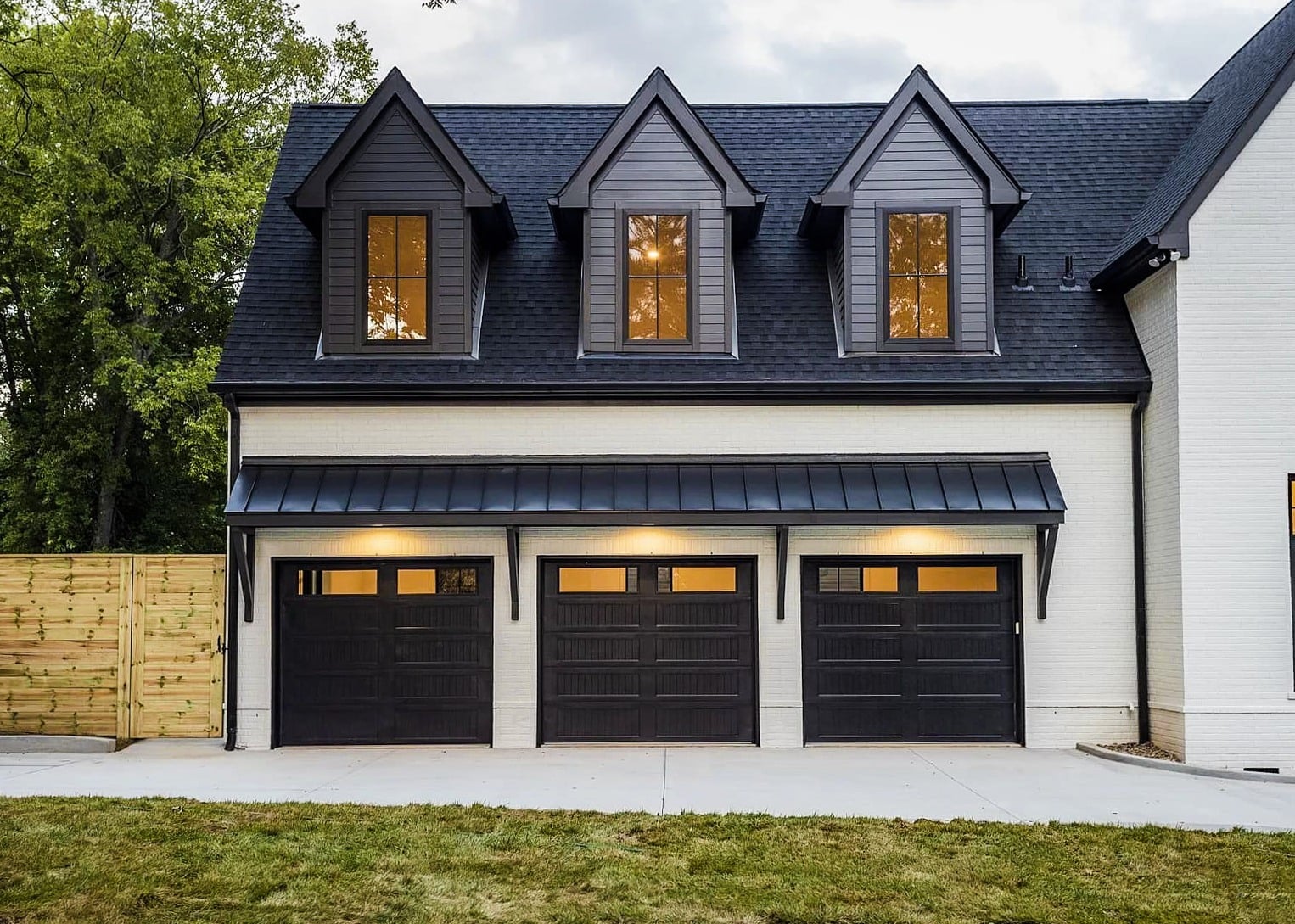
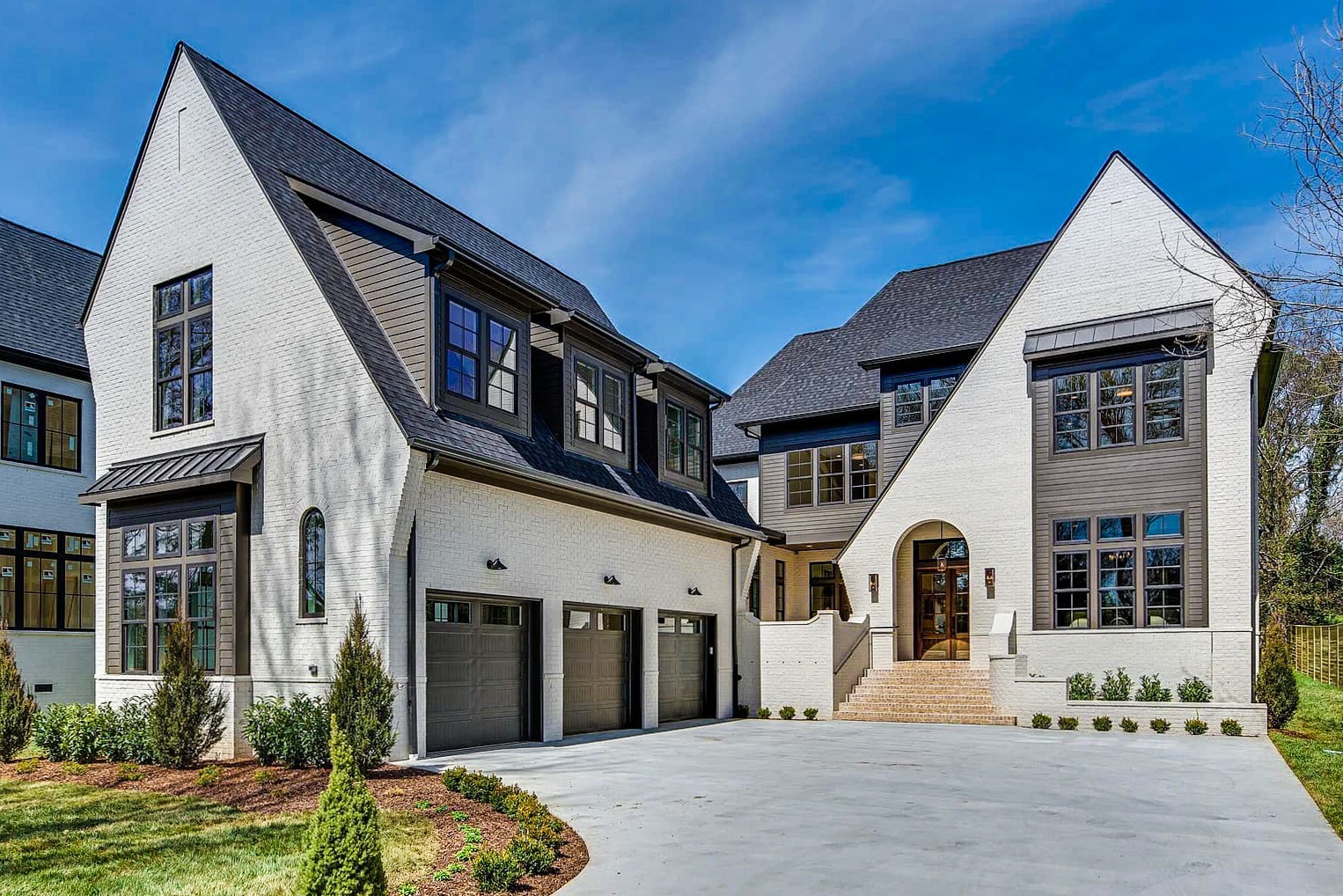
Panel style should follow the home's architecture, not the color chart. A flat profile like skyline flush or sterling suits contemporary and mid-century homes, a wood-look profile like planks fits ranch or craftsman exteriors, and a carriage door signals farmhouse or colonial. Within the carriage doors specifically, the detailing is applied differently: on stamped carriage house, the crossbuck pattern is pressed directly into the steel, while on overlay carriage house it's applied on top as a separate piece, which changes both the depth of the shadow line and the material options available. Defaulting to whichever family a dealer has readiest in stock is one of the most common ways a new build ends up with a door that reads as an afterthought against custom siding or masonry.
Color and finish system
Color range varies more than people expect within a single brand's catalog. Raised panel and stamped shaker each combine roughly nine solid colors with a matching set of woodtones, sterling trades the woodtone option for the longest solid-color list at 25, and overlay carriage house is the only family that steps outside painted or printed finishes entirely into real wood. Beyond the standard palette, every family can be ordered in custom powder coat, up to 188 colors, or color-matched through Sherwin-Williams, so the standard list is a starting point rather than a ceiling. DoorVisions is worth using before you order, since a color renders differently in person than on a screen, and both custom powder coat and real-wood finishes can extend the time it takes to get your door.
Insulation
Insulation requirement depends on whether the garage is attached and conditioned, or a detached structure used mainly for storage. Within the same door family, the jump between the uninsulated or polystyrene build and the polyurethane build is usually 6 to 8 R-value points, which translates into a noticeably warmer garage in winter and a cooler one in summer if the space sits behind a bedroom or a home office. For an attached garage in a cold climate, the highest R-value construction in a given family, such as R-18.03 on overlay carriage house's wood 5700, is usually worth the difference in cost over the uninsulated or lower R-value build in the same family.
Warranty
Warranty terms vary by family and by material, not just by brand. Most C.H.I. sections carry a limited lifetime warranty, but sterling's sections carry 5 years, and overlay carriage house drops to 3 years on steel or fiberglass and 1 year on real wood, which must be field-painted before install. Hardware and powder-coat finish carry their own separate terms on top of the section warranty. If you're specifying a custom color or the real-wood overlay option, confirm the finish and section warranty specifically rather than assuming the limited lifetime term applies across the board.
How to choose the right C.H.I. garage door for a custom home build
Step 1: Match the door to the home's style
Start with the home's architecture. Overlay carriage house garage doors suit a farmhouse or colonial build, stamped carriage house suits the same styles at a lower cost, and a flat profile like sterling or skyline flush suits a contemporary or mid-century build.
Step 2: Choose color and finish
Once the panel style is set, design your door using DoorVisions against a photo of the build, or a similar home if yours isn't finished yet. Compare the family's standard solid colors against its woodtone set and custom powder coat side by side, since a woodtone, a custom color, or the real-wood overlay option usually costs more and can extend the timeline.
Step 3: Set the insulation requirement
Decide whether the garage is attached, conditioned, or used as a workshop or living space, then match the R-value to that use within the family you've chosen. The highest R-value build in each family suits an attached garage in a cold climate, while the uninsulated or lower R-value build is enough for a detached, unconditioned space.
Step 4: Understand the warranty
Read the warranty by family and by component: sections, hardware, and finish. Confirm the section warranty specifically if you're considering overlay carriage house's real-wood option, since it carries a shorter term than C.H.I.'s other families.
Step 5: Confirm with a local dealer
C.H.I. doors are sold and installed exclusively through a network of dealers. A local dealer measures the opening, confirms which colors and constructions are available for the family you've chosen, and sends a quote within 7 days. Find your local C.H.I. dealer to talk through your build.
Frequently asked questions
Which C.H.I. garage door has the widest color range for a custom home build?
It depends on how you count. Sterling lists the most individual colors at 25, but doesn't offer a separate woodtone line. Raised panel combines the largest standard palette of any single family, 10 solid colors and 9 Accents Woodtones, 19 options in total. Overlay carriage house is the outlier: it's the only family available in real cedar or mahogany wood rather than a printed or painted finish, so it wins on material variety rather than color count.
What should I look for when comparing C.H.I.'s door families?
Treat panel style, color and finish system, insulation, and warranty as four separate decisions. A long color list matters less than whether the family's construction and warranty actually fit your build, since both vary meaningfully across C.H.I.'s seven residential families, not just between brands.
How long does professional installation take?
Once your door arrives, an installer typically installs it in 4 to 6 hours per door. Ahead of that, a local dealer sends a quote within 7 days of measuring your opening, and confirmation and production happen before delivery. Ask your dealer for current lead times, since a custom color, powder coat, or the real-wood overlay option can extend the schedule beyond a standard finish.
Does the warranty differ between C.H.I.'s door families?
Yes. Most families, including planks, raised panel, stamped shaker, stamped carriage house, and skyline flush, carry a limited lifetime section warranty. Sterling is the named exception at 5 years. Overlay carriage house drops further, to 3 years on steel or fiberglass sections and 1 year on the real-wood sections, which must be field-painted before install.
What's the difference between stamped carriage house and overlay carriage house?
Stamped carriage house presses the crossbuck pattern directly into the steel, which keeps the cost and the section warranty in line with C.H.I.'s other families, at a limited lifetime term. Overlay carriage house applies the crossbuck as a separate piece on top of the base door and is available in steel, fiberglass, or real cedar and mahogany wood, with a shorter 3-year or 1-year section warranty depending on the material. Both use the same crossbuck styling; the choice comes down to material, cost, and warranty term.
Are these doors rated for high-wind or coastal environments?
C.H.I. offers wind-rated options through its Windbreaker Series and impact-approved iSeries, verified through the Wind Load Document Finder, though C.H.I. does not currently hold Miami-Dade certification. If you're building in a coastal or high-wind jurisdiction, confirm the specific wind-load rating and any local certification requirement with your dealer and building authority before finalizing your door.
Choosing the right C.H.I. garage door for your build
Across these seven families, the real differences are in construction and material, not brand. Sterling and skyline flush suit a flat, contemporary read. Planks and the carriage doors suit a wood-look or wood-real exterior. Raised panel and stamped shaker sit in between, with the widest combined standard palettes of the group. A well-specified door for a new build matches panel style to the home's architecture first, then narrows color and finish against the exterior materials already chosen for the house, and only then compares insulation and warranty family by family.
Professional installation matters as much as the color chart. A dealer who measures the opening, confirms which construction and finish options apply to your chosen family, and installs the finished door protects the decision you made on color and finish. C.H.I. Overhead Doors runs entirely on this dealer model for its residential garage doors, across all seven families compared here.
Why C.H.I. Overhead Doors fits a custom home build
Whichever of these seven families fits your build, they share the same standards behind the finish. Every steel door is built with Nucor Econiq steel, net-zero carbon steel that's 100% recyclable and made up of 65.25% recycled ferrous scrap metal. Standard solid colors and Accents Woodtones cover most homes without an upgrade, and a custom powder coat or Sherwin-Williams color match covers the rest. DoorVisions lets you preview a specific family and color combination against your build before you order, which matters more on a new house than on a straight replacement, since there's no existing door to compare against.
Installation is handled by the same dealer network from quote to install, in 4 to 6 hours per door once your door arrives, and most sections carry a limited lifetime warranty regardless of which of the seven families you choose. Garage door replacement also returns an average 268% at resale nationally, per Zonda's Cost vs Value report, a category-wide figure worth factoring into a new build's overall design budget.
Find your local C.H.I. dealer to talk through which of these seven families fits your build, and get a quote within 7 days.