Planks
 Sterling
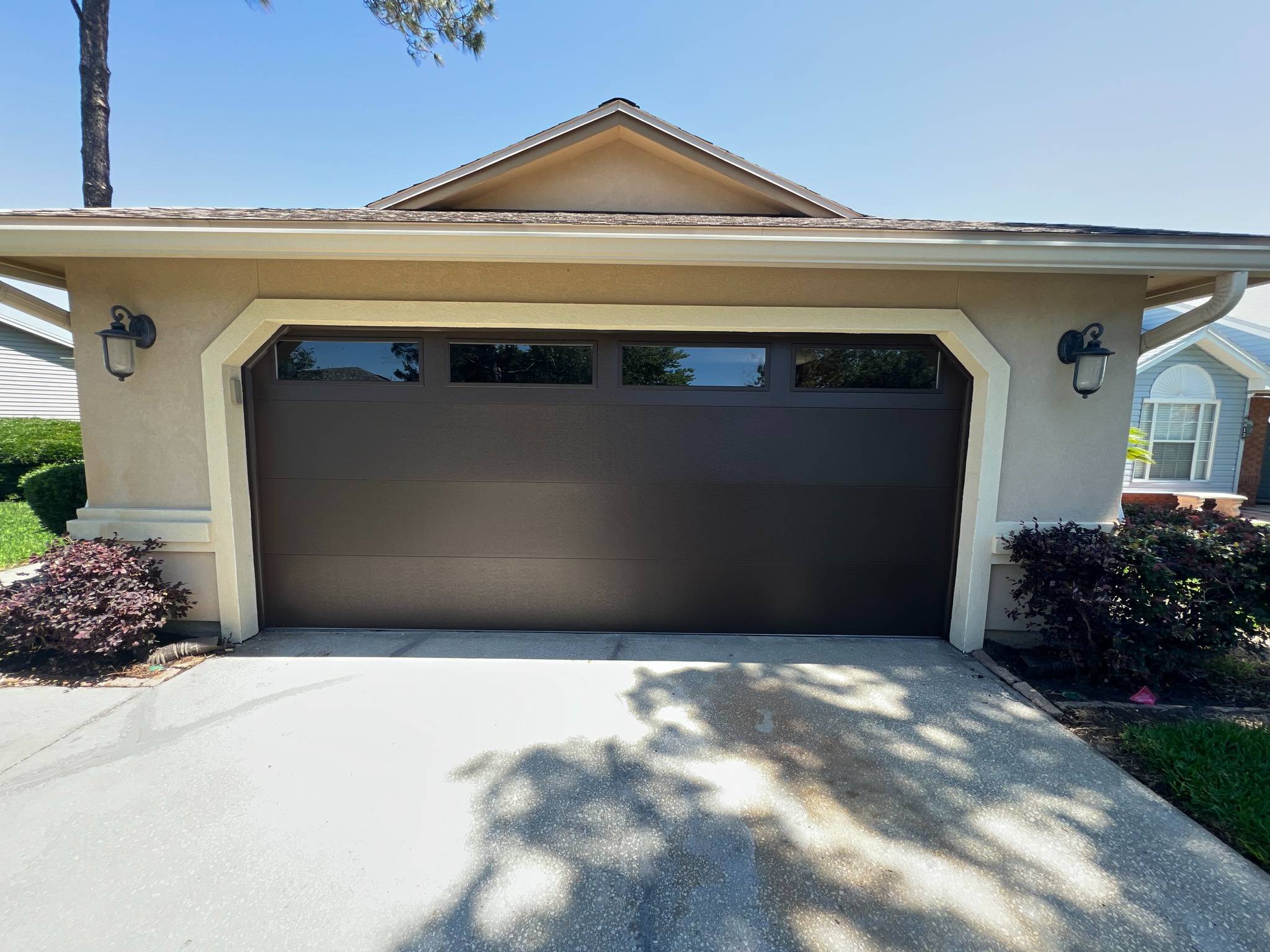
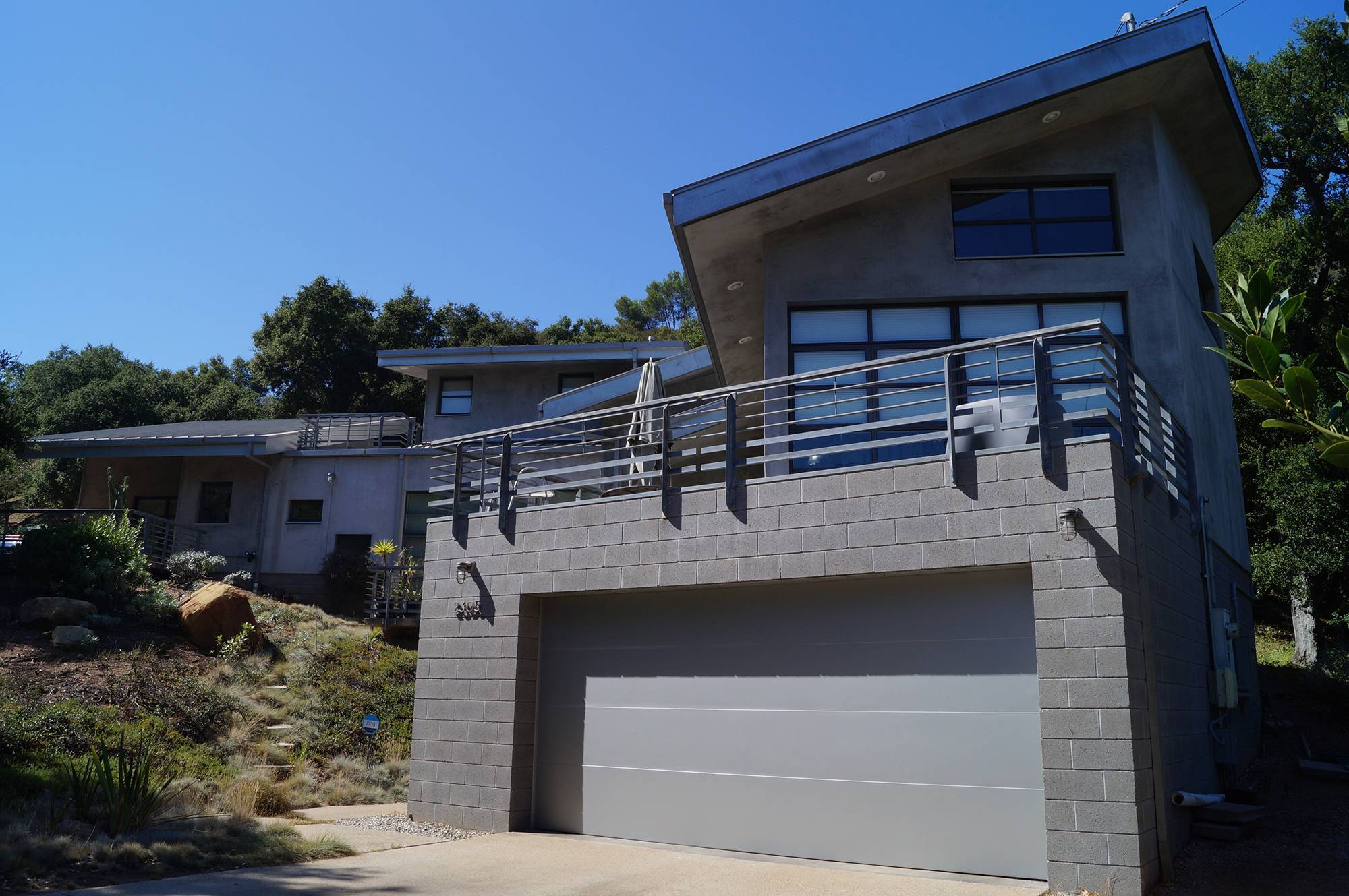
 Skyline flush
 Shoreline
 Overlay carriage house
 Raised panel
 Stamped carriage house
 Stamped shaker
 Full-view aluminium
 Recessed panel
 Free color samples
 Compare doors


 Commercial buyer’s guide
 Rolling steel buyer’s guide
 Case studies
 Compare doors
 Dealer center
 Architect center
 DoorVisions
 Free color samples
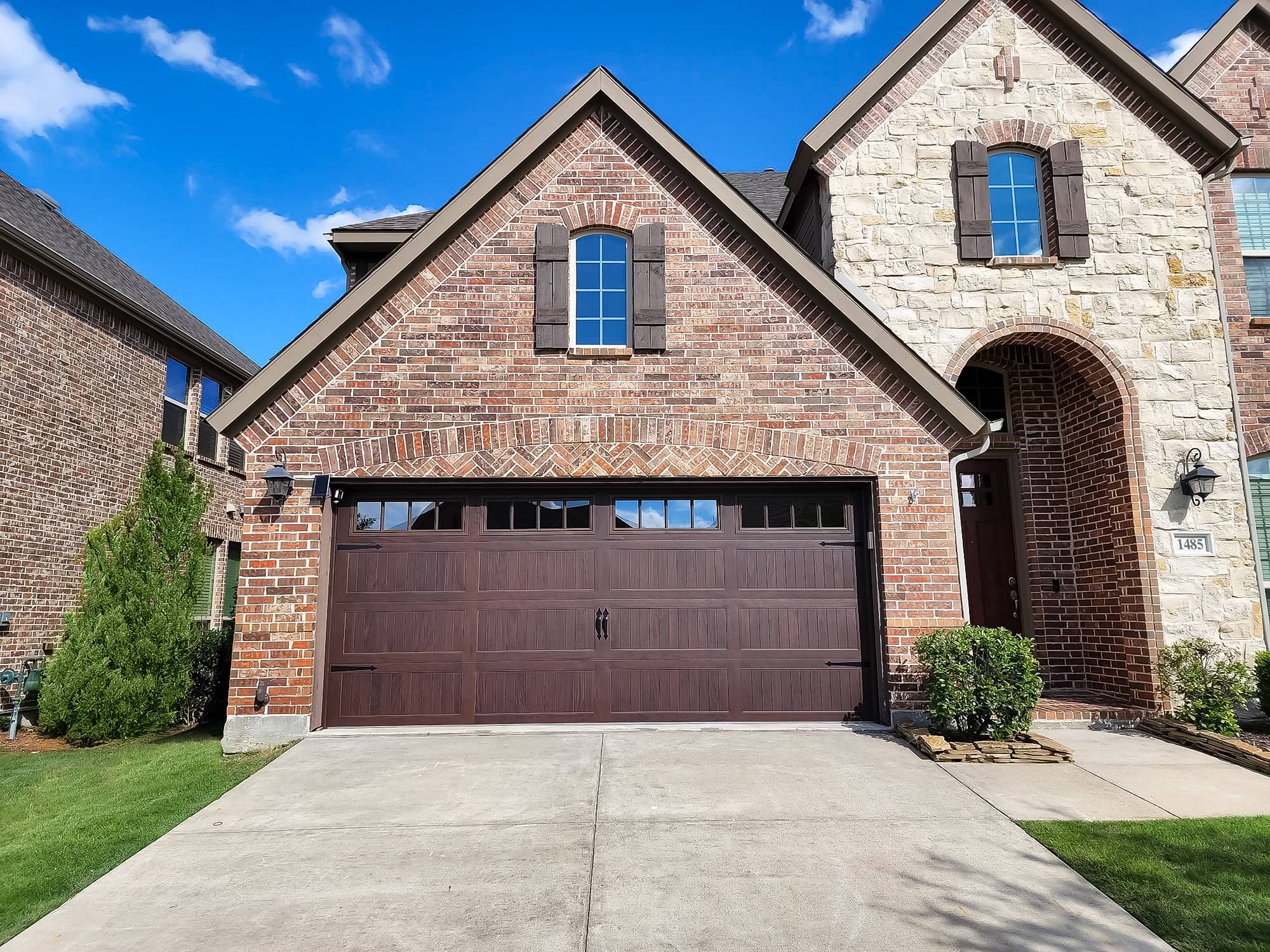
The best garage doors for transitional homes in 2026 are the stamped shaker, overlay carriage house, and raised panel doors from C.H.I. Overhead Doors. All three combine a traditional panel design with simple lines. The stamped shaker suits homes that lean modern. The overlay carriage house suits homes that lean farmhouse or classic. The raised panel suits homes that sit right in the middle.
Transitional style is a balance between old and new. Think of a navy blazer over a white T-shirt. The tailoring is classic, and the styling is relaxed.
The garage door is one of the largest single elements on the front of your home. A very ornate door can look fussy on a transitional home. A flat glass door can look out of place beside shutters and a pitched roof.
What is a transitional home style?
A transitional home mixes traditional architecture with modern finishes. You'll often see a classic shape, such as a gabled roof, a covered porch, or a symmetrical front, paired with simple trim and a neutral color palette. Contrast comes from color and material rather than decoration.
Black or bronze window frames, light lap or board-and-batten siding, and natural wood accents are common details. A transitional home can be a new build. It can also be an older colonial, ranch, or farmhouse that's been updated with simpler trim and neutral colors.
Because transitional homes borrow from both sides, they suit a narrower set of garage door styles than you might expect. Choose a door with enough panel shape to match the traditional form of the house, and keep ornament to a minimum.
What to look for in a garage door for a transitional home
A simple panel design with some depth
Defined panels with little ornament suit transitional homes best. Flat recessed panels, square crossbucks, and plain raised panels all give the door shape without extra decoration. A completely flat door can look too modern unless the rest of the house leans that way. Arched tops and busy patterns make a door look more traditional.
A neutral or woodtone finish
Most transitional exteriors use neutral colors. White, gray, sandstone, graphite, and black are all easy choices for the door. A woodtone finish adds warmth against painted siding or brick. If you're unsure where to start, match the door to your window frames or your trim.
Windows that keep the lines clean
Rectangular windows across the top section, with plain or frosted glass, suit transitional style. Decorative inserts and arched windows make the door look more traditional.
Garage doors for transitional homes at a glance
R-value measures how well insulation resists heat flow. The higher the number, the better the door keeps heat in during winter and out during summer.
| Door | Panel design | Leans toward | Insulation | Finish options |
|---|---|---|---|---|
| Stamped shaker | Flat recessed shaker panels pressed into the steel | Modern | None, or R-7.94 to R-16.55 | 9 plain colors and 9 woodtones |
| Overlay carriage house | Crossbucks applied on top of a steel base, with square or arched panels | Farmhouse and classic | R-10.29 to R-18.03 | Solid and two-tone colors, or cedar and mahogany wood |
| Raised panel | Short or long raised panels | In between | None, or R-7.94 to R-17.19 | 10 solid colors and 9 woodtones |
The best garage doors for transitional homes
1. Stamped shaker
C.H.I. Overhead Doors designs the stamped shaker for both modern and traditional homes, which makes it a natural fit for a transitional exterior. The shaker panel design is pressed directly into the steel. That gives a shallow, even profile that's more understated than an overlay or carriage door.
Our shaker style garage doors suit transitional homes with black window frames, board-and-batten siding, or a minimal porch. Graphite or black gives a crisp, modern finish. A woodtone such as Accents walnut softens it.
- Finish options. 9 plain colors, including white, gray, graphite, and black, and 9 woodtones, including Accents walnut and Accents dark oak.
- Windows. Oversized windows with glass options such as frosted, obscure, plain, seeded, tinted, and rain.
- Insulation. Polystyrene at R-7.94 on model 2551 (2" 1-sided steel with a vinyl back), polystyrene at R-9.65 on model 2583 (2" 2-sided steel), and polyurethane at R-16.55 on 2" 2-sided steel.
- Warranty. Limited lifetime warranty on the sections.
2. Overlay carriage house
On an overlay carriage house door, the crossbuck pattern is applied on top of the base door as separate pieces. That extra layer gives the door more texture and depth than a stamped design. C.H.I. Overhead Doors offers three design styles, all with crossbucks, in square or arched panels.
The panel shape you choose changes how traditional the door looks. Square panels in a solid color such as black or white keep our overlay carriage house garage doors simple enough for a transitional home. With arched panels and a wood finish, the door looks closer to a classic farmhouse door.
The overlays come in three materials. Steel is durable and low-maintenance. Wood gives real wood grain. Fiberglass suits humid and coastal areas.
- Finish options. Solid steel colors such as white, almond, sandstone, bronze, and black, two-tone white and almond or white and sandstone, and real wood in cedar or mahogany.
- Windows. Carriage house windows with glass options such as frosted, obscure, plain, seeded, tinted, and rain.
- Insulation. Every model uses 2-sided steel construction. Steel model 5300 has polystyrene at R-10.29. Wood model 5700 has polyurethane at R-18.03, the highest R-value of the three doors in this guide.
- Warranty. Terms vary by material. The overlays carry a 1 to 3 year warranty. Ask your dealer for the terms on your model.
Wood models must be finished following C.H.I. instructions before installation. Wood also needs periodic resealing or staining after that.
3. Raised panel
On a C.H.I. Overhead Doors raised panel door, rectangular panels sit proud of the door surface. It's a classic design that works across a wide range of home styles. That makes it a reliable middle ground for a transitional home that doesn't lean strongly either way.
Our raised panel garage doors come with short or long panels. Long panels mean fewer vertical breaks across the door, which gives the front of the house a simpler, more horizontal line. Short panels create a grid that tends to suit more formal, symmetrical homes.
- Finish options. 10 solid colors, including evergreen, graphite, and black, and 9 woodtones, including Accents carbon oak and Accents walnut.
- Windows. Short or long windows with glass options such as frosted, obscure, plain, tinted, and rain.
- Insulation. Five insulation options, from polystyrene at R-7.94 on model 2251 (2" 1-sided steel with a vinyl back) to polyurethane at R-17.19 on model 2216 (2" 2-sided steel).
- Warranty. Limited lifetime warranty on the sections.
Which door suits your home?
Start by looking at your windows, trim, and roofline. Then decide which way your home leans.
- Your home leans modern. If your home has black window frames, minimal trim, and a simple roofline, choose the stamped shaker. Try it in graphite, black, or a woodtone.
- Your home leans farmhouse or classic. If your home has board-and-batten siding, a covered porch, or shutters, choose the overlay carriage house with square panels. For more ideas, see our farmhouse garage doors page.
- Your home sits in the middle. Choose the raised panel with long panels in a neutral color.
Still undecided? Upload a photo of your home to DoorVisions and try all three doors on your own façade. You can also order free color samples to check a finish against your siding in daylight. When you're ready, find your local C.H.I. dealer to talk through sizes and options.
How to choose the right insulation
Your garage's use and location matter more than the door style here. If your garage is attached to the house, or you use it as a workshop, gym, or extra living space, choose polyurethane. It keeps the garage warmer in winter and cooler in summer, which can help lower your energy bills. Polystyrene works well for moderate climates, detached garages, and simple vehicle storage.
Construction matters too. On 2-sided steel, the insulation sits between two steel skins. On 1-sided steel with a vinyl back, a vinyl layer covers the insulation on the inside face. Our guide to insulated vs non insulated garage doors explains the trade-offs in more detail.
Frequently asked questions
What is the best garage door for a transitional home?
C.H.I. Overhead Doors offers three strong options for transitional homes. They are the stamped shaker, the overlay carriage house, and the raised panel. The stamped shaker suits homes that lean modern, the overlay carriage house with square panels suits homes that lean farmhouse, and the raised panel suits homes in between. The recessed panel door is another option if you want inset panels with a slightly more traditional profile. Pick the door that matches your window frames and trim.
What color garage door goes best with a transitional home?
Neutral colors work best on transitional homes. White, gray, sandstone, graphite, and black are common choices, and a woodtone finish adds warmth against painted siding. Matching the door to your window frames or trim keeps the front of the house consistent. You can browse C.H.I. garage door colors by shade, and powder coating in 188 colors is available on some doors if you need a custom match.
Should a transitional garage door have windows?
Windows are optional, but they suit transitional homes when the design stays simple. A single row of rectangular windows with plain or frosted glass keeps the lines clean. Decorative inserts and arched windows make the door look more traditional. Frosted or obscure glass lets daylight into the garage while keeping the inside private.
Is a carriage house door too traditional for a transitional home?
Not if you choose the right design. An overlay carriage house door with square panels and a solid color such as black or white looks simpler than one with arched panels and a wood finish. With a crossbuck pattern, the door has texture without heavy ornament. If you want an even quieter profile, the stamped shaker is the more understated choice.
How long does it take to get a new garage door installed?
With C.H.I. Overhead Doors, a local dealer sends you a quote within 7 days. Once your door arrives, installation takes 4 to 6 hours per door. Lead times depend on the door and options you choose, so ask your dealer for current timings. The same dealer handles measurement, installation, and aftercare.
Find the right transitional garage door with C.H.I. Overhead Doors
Each of the three doors suits a different kind of transitional home. C.H.I. Overhead Doors makes all three in the USA. Our doors are made from Nucor Econiq steel, which is 100% recyclable and made up of 65.25% recycled ferrous scrap metal.
You're spoiled for choice on finish, with solid colors, Accents Woodtones, or a custom powder coat.
A new garage door is also one of the few home upgrades that can more than pay for itself when you sell. Garage door replacement returned 268% at resale nationally in the 2025 Cost vs. Value report from Zonda, an industry-wide figure for the category. As a verified C.H.I. customer put it, "I saw a neighbor had this door and fell in love with it. It makes our home look beautiful."
C.H.I. doors are sold only through local dealers, so there's no big-box handoff. One dealer handles your measurement, installation, and aftercare. Find your local C.H.I. dealer and request a quote for the door that fits your home.