Planks
 Sterling
 Skyline flush
 Shoreline
 Overlay carriage house
 Raised panel
 Stamped carriage house
 Stamped shaker
 Full-view aluminium
 Recessed panel
 Free color samples
 Compare doors


 Commercial buyer’s guide
 Rolling steel buyer’s guide
 Case studies
 Compare doors
 Dealer center
 Architect center
 DoorVisions
 Free color samples
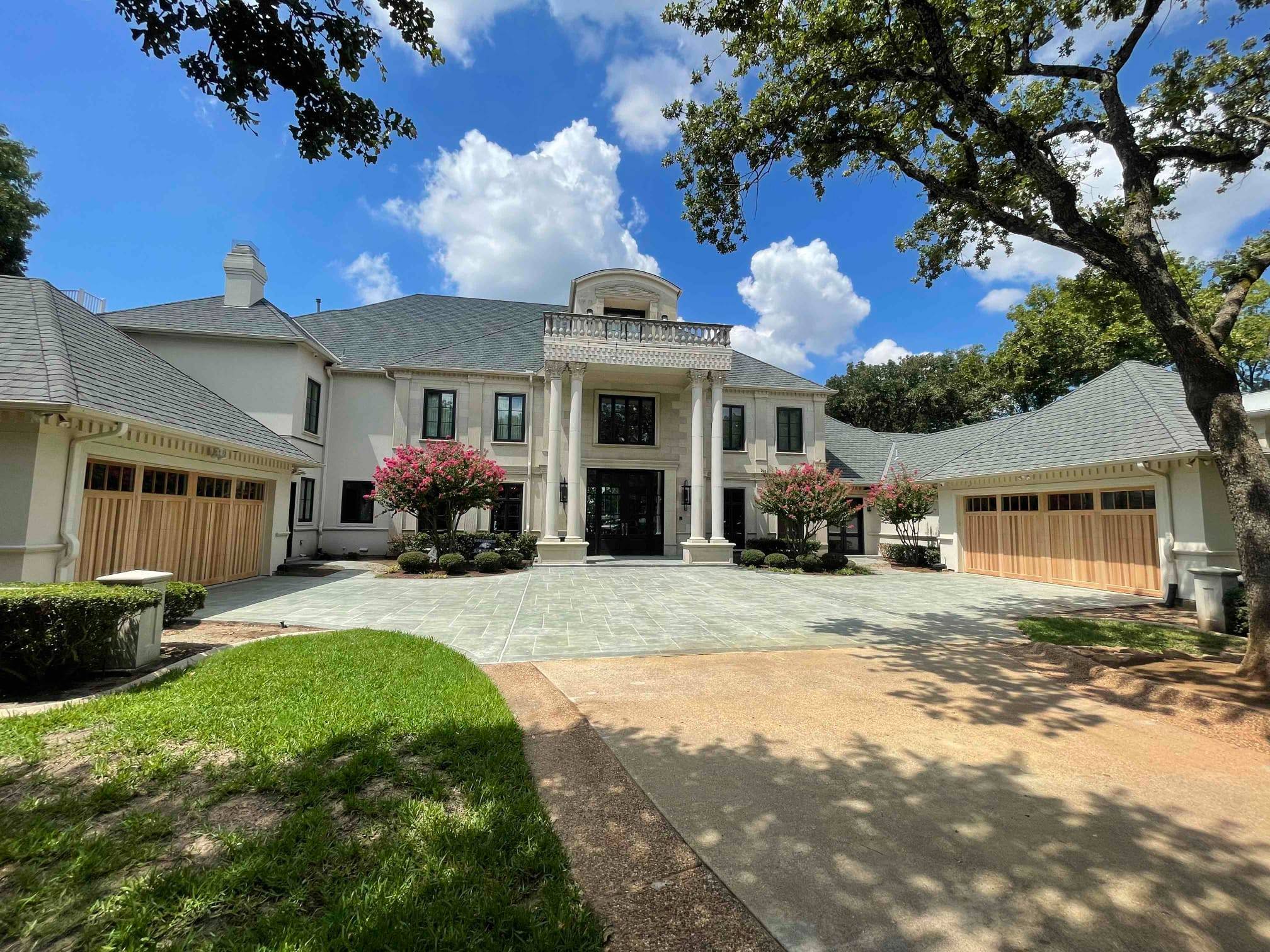
The best garage doors for colonial homes in 2026 are the overlay carriage house garage doors, raised panel garage doors, and recessed panel garage doors from C.H.I. Overhead Doors. All three are built with Nucor steel and use panel layouts that suit a colonial's symmetrical front. The overlay carriage house adds crossbuck detail. The raised panel shares the panel pattern of the six-panel front door found on many colonials. The recessed panel keeps the front of the house simple and quiet.
Picture the McCallister house in Home Alone. It's a red brick colonial outside Chicago, with a centered front door and evenly spaced windows on both floors. That balance is the core of colonial design, and a garage door that ignores it stands out.
Colonial homes are usually symmetrical, with steep gable roofs, a central front door, and shutters. Many also have pillars and dormer windows. The garage door is often one of the largest single features on the front of the house. A flat, modern door can look out of place next to paneled shutters and a six-panel entry door.
Choosing a door for a colonial comes down to four things: the panel style, the color, the windows, and the insulation.
Best garage doors for colonial homes comparison
These 3 C.H.I. Overhead Doors styles suit colonial homes, compared across construction, insulation, color range, and standout feature to help you weigh your options.
| Door | Construction | Insulation | Colors | Standout feature for colonials |
|---|---|---|---|---|
| Overlay carriage house | 2-1/2" or 2-3/4" 2-sided steel, 27 Ga, with steel, fiberglass, or real wood overlays | Polystyrene R-10.29 (5300) up to polyurethane R-18.03 (5700) | 5 solid colors, 2 two-tone finishes, and cedar or mahogany wood | Applied crossbucks, with square or arched panels |
| Raised panel | 2" 1-sided steel (2250) up to 2" 2-sided steel, 27 Ga (2216 and 4216) | No insulation (2250) up to polyurethane R-17.19 (2216 and 4216) | 10 solid colors and 9 woodtones | Short or long raised panels that match a six-panel front door |
| Recessed panel | 2" 2-sided steel, heavy-duty 25 Ga, on every model | Insulated on every model, contact a local dealer for specifications | White, almond, and sandstone | Four panel layouts with an embossed woodgrain finish |
The 3 best garage doors for colonial homes
1. Overlay carriage house
C.H.I. Overhead Doors makes the overlay carriage house in three materials: steel, real wood, and fiberglass. On an overlay door, the crossbucks are separate pieces applied on top of the base door. That gives the X or Z pattern real depth, with a shadow line you can see from the street.
Choose this door if you want more detail on the front of your colonial than a plain panel door gives. You can choose square or arched panels. If your front door has an arched window above it, an arched panel repeats that curve on the garage.
Each material needs a different level of upkeep. Steel is the low-maintenance option. Wood comes in real cedar or mahogany. Wood doors must be finished before installation to keep warranty coverage. We suggest fiberglass for humid and coastal areas.
Insulation runs from R-10.29 polystyrene on the 5300 steel door to R-18.03 polyurethane on the 5700 wood door. A higher R-value keeps an attached garage warmer in winter and cooler in summer. That can help lower your energy bills.
- Construction. 2-1/2" or 2-3/4" 2-sided steel, 27 Ga, on every model.
- Insulation. From R-10.29 polystyrene on the 5300 to R-18.03 polyurethane on the 5700.
- Colors. White, almond, sandstone, bronze, and black, two-tone white with almond or white with sandstone, and cedar or mahogany wood.
- Warranty. 1 to 3 years on overlays and 3 years on springs. Ask your dealer for the section and hardware terms on your model.
2. Raised panel
Many colonial front doors are six-panel doors with raised panels. Our raised panel doors have the same kind of panel, so the garage matches the entry. Each panel starts with a recessed edge, and the center of the panel is brought slightly forward.
You can choose short or long panels. Short panels form a grid of smaller rectangles, which suits a traditional colonial with multi-pane windows. Long panels run wider across each section and give a simpler rhythm.
This door has the widest color range of the three. You can pick from 10 solid colors and 9 woodtones, including Accents Woodtones such as walnut and dark oak. Black and evergreen are both standard, and both are classic shutter colors on colonial homes.
There are five insulation options. The 2250 has no insulation. The 2251 and 2241 use polystyrene at R-7.94 on 1-sided steel with a vinyl back. The 2216 and 4216 use polyurethane at R-17.19 on 2" 2-sided steel. That suits an attached garage or a garage with a room above it.
- Panels. Short or long, with short or long windows.
- Insulation. From no insulation on the 2250 to R-17.19 polyurethane on the 2216 and 4216.
- Colors. 10 solid colors and 9 woodtones.
- Warranty. Limited lifetime on sections and 3 years on springs. Hardware coverage depends on the hardware grade.
3. Recessed panel
C.H.I. Overhead Doors recessed panel doors have panels set into the face of the door rather than raised from it. The steel is embossed with a natural woodgrain pattern. Of the three doors here, it has the plainest face. That suits a colonial with simple trim, or a smaller Cape Cod home where you want the garage to stay in the background.
You can choose from four panel layouts: flush, long, short, and a combination of long and short. Every model is built from 2" 2-sided steel with heavy-duty 25 Ga steel on the outside. Heavy-duty steel is thicker and resists dents better.
Every recessed panel model is insulated. The door comes in white, almond, and sandstone. White is a common trim color on colonial homes, so a white recessed door blends in with the trim.
- Panels. Flush, long, short, or combo.
- Construction. 2" 2-sided steel, heavy-duty 25 Ga, on every model.
- Colors. White, almond, and sandstone.
- Warranty. Limited lifetime on sections and 3 years on springs.
What to look for in garage doors for colonial homes
Panel style and symmetry
Colonial homes are built around balance, so start with the panels. Look at your front door first. If it's a six-panel door, a raised panel garage door matches it. If you want more detail, an overlay carriage house door adds crossbucks. Our guide to matching your front door to your garage door covers this in more detail.
On a two-car garage, two single doors can mirror paired windows above them. One double door gives a cleaner, wider span. Either works if the panel rows line up with the windows on the floor above.
Color and finish
Colonials often combine white trim with red brick, painted siding, and dark shutters. White doors go with white trim. A black or evergreen door can match the shutters. If your home is brick, our guide to the best garage door color for a red brick house walks through the options.
Start with the standard solid colors and Accents Woodtones. We work with Sherwin-Williams to set our color formulas, so you can paint your trim to match the door. For something more custom, powder coat is available in 188 colors on some models. Availability varies by model, so check with your dealer. You can also order free color samples to test against your siding.
Windows and glass
Colonial windows often have multiple panes. Window inserts such as stockton and madison add a pattern over the glass, which can echo those windows. Ask your dealer which inserts are available on your door. For privacy, frosted or obscure glass lets light in without letting people see into the garage.
Insulation
Insulated garage doors help keep the garage at a steadier temperature. R-value measures how well insulation resists heat flow. The higher the number, the better it keeps heat in during winter and out in summer. If your garage is attached or sits under a bedroom, choose polyurethane, such as R-17.19 on the raised panel 2216 or R-18.03 on the overlay carriage house 5700.
How to choose the right garage door for your colonial home
Step 1: Match the door to your home's style
A formal colonial with shutters and a six-panel front door suits a raised panel or overlay carriage house door. A simpler colonial or a Cape Cod home suits a recessed panel door. Browse our garage door styles to compare doors by home type.
Step 2: Choose your color and finish
Pick a color that matches your trim or your shutters. Upload a photo of your home to DoorVisions and try different doors, colors, and windows before you order.
Step 3: Set your insulation requirement
For a detached garage in a mild climate, polystyrene, such as R-7.94 on the raised panel 2251, is a sensible starting point. For an attached garage or a room above it, polyurethane, such as R-17.19 on the raised panel 2216, keeps the space more comfortable.
Step 4: Understand the warranty
Warranty terms vary by door and by part. Raised panel and recessed panel doors carry a limited lifetime warranty on sections. On the overlay carriage house, overlays are covered for 1 to 3 years, and wood doors must be finished before installation to keep coverage.
Step 5: Choose a door backed by a professional dealer
C.H.I. Overhead Doors sells only through local dealers. Your dealer measures your opening, sends you a quote within 7 days, and installs the door. The install itself takes 4 to 6 hours per door. Find your local C.H.I. dealer to get started.
Frequently asked questions
What is the best garage door for a colonial home?
C.H.I. Overhead Doors makes three garage doors that suit colonial homes: the overlay carriage house, the raised panel, and the recessed panel. The overlay carriage house adds crossbuck detail and comes in steel, wood, or fiberglass. The raised panel matches the six-panel front doors found on many colonials and comes in 10 solid colors. The recessed panel has the simplest face of the three, with an embossed woodgrain finish. The stamped carriage house and stamped shaker are also worth a look.
What color garage door looks best on a colonial house?
White is a safe choice because it matches white colonial trim. Black and evergreen suit colonials with dark shutters, and both are standard colors on the raised panel. On a red brick colonial, white, almond, and sandstone are all good options. Free color samples let you check a color against your siding before you order.
What is the difference between overlay and stamped carriage house garage doors?
Both carry the crossbuck or cross-bracing pattern, which is the X or Z detail on a carriage door. On a stamped carriage house garage door, the pattern is pressed into the steel. On an overlay carriage house door, the pattern is made from separate pieces applied on top of the base door. The overlay version has more depth and comes in steel, wood, or fiberglass.
Do I need an insulated garage door for a colonial home?
It depends on how you use the garage. If it's attached to the house or sits under a bedroom, insulation keeps the space warmer in winter and cooler in summer, which can lower your energy bills. Polyurethane gives the highest R-values in this guide, such as R-17.19 on the raised panel 2216 and R-18.03 on the overlay carriage house 5700. A detached garage used only for parking may need less.
How long does professional garage door installation take?
Installation takes 4 to 6 hours per door. That's the install only. Before that, your local dealer measures the opening and sends you a quote within 7 days. Production and delivery times vary, so ask your dealer for current lead times.
Does a new garage door add resale value?
Yes. Garage door replacement returned 268% of its cost at resale, according to Zonda's 2025 Cost vs Value report. That's an industry-wide figure for the category, not a figure for one brand. It's one of the few home upgrades that can more than pay for itself when you sell.
Choosing the right garage door for your colonial home
All three doors in this guide share a traditional panel layout, steel construction, and a range of insulation options. The right one depends on your home. Raised panel suits a formal colonial with a six-panel front door. Overlay carriage house suits a colonial where you want more detail. Recessed panel suits a simpler front.
Start with your front door, your trim color, and how you use the garage. Then work with a local dealer. One dealer handles measurement, installation, and aftercare. You can compare all our residential garage doors side by side before you decide.
Why C.H.I. Overhead Doors is the right choice for colonial homes
C.H.I. Overhead Doors makes three door styles that suit colonial homes, each with a choice of insulation levels. Insulation reaches R-18.03 on the overlay carriage house 5700.
You can choose from standard solid colors, Accents Woodtones, or a custom powder coat on many models. DoorVisions lets you see the door on a photo of your home before you order. Our doors are made in the USA from Nucor Econiq steel, which is 100% recyclable and made up of 65.25% recycled ferrous scrap metal.
A local C.H.I. dealer sells, installs, and services every door. The install takes 4 to 6 hours per door, with no big-box handoff. As a verified C.H.I. customer put it, "Installation was flawless and tech was great. Measured for me and made sure I ordered what I needed and wanted."
Find your local C.H.I. dealer and request a quote for your colonial home.