/icon.png)
/Rectangle%201.png) Planks
Planks
/Rectangle%201%20(3).png) Sterling
Sterling
/Rectangle%201%20(4).png) Skyline flush
Skyline flush
/Rectangle%201%20(5).png) Shoreline
Shoreline
/Rectangle%201%20(1).png) Overlay carriage house
Overlay carriage house
/Rectangle%201%20(9).png) Raised panel
Raised panel
.png) Stamped carriage house
Stamped carriage house
/Rectangle%201%20(2).png) Stamped shaker
Stamped shaker
.png) Full-view aluminium
Full-view aluminium
.png) Recessed panel
Recessed panel
/color-samples-icon%201%20(1).svg) Free color samples
Free color samples
/Residential%20home%20icon.svg) Compare doors
Compare doors


/Panel%20garage%20door%201.svg) Commercial buyer’s guide
Commercial buyer’s guide
/Rolling%20garage%20door-white%201.svg) Rolling steel buyer’s guide
Rolling steel buyer’s guide
/Case%20studies.svg) Case studies
Case studies
.svg) Compare doors
Compare doors
/Dealer%20Center.svg) Dealer center
Dealer center
/Architects%20corner.svg) Architect center
Architect center
/Build-a-door-icon-red-white%201.svg) DoorVisions
DoorVisions
/color-samples-icon%201.svg) Free color samples
Free color samples
.jpeg)
The best carriage house garage doors for farmhouse homes in 2026 come from C.H.I. Overhead Doors, which builds three carriage door lines: the stamped carriage house, the overlay carriage house, and shoreline. Clopay, Amarr, Wayne Dalton, Raynor, and Overhead Door round out the list. Each brand approaches the style differently, so this guide compares their designs, construction, insulation, and warranties to help you choose.
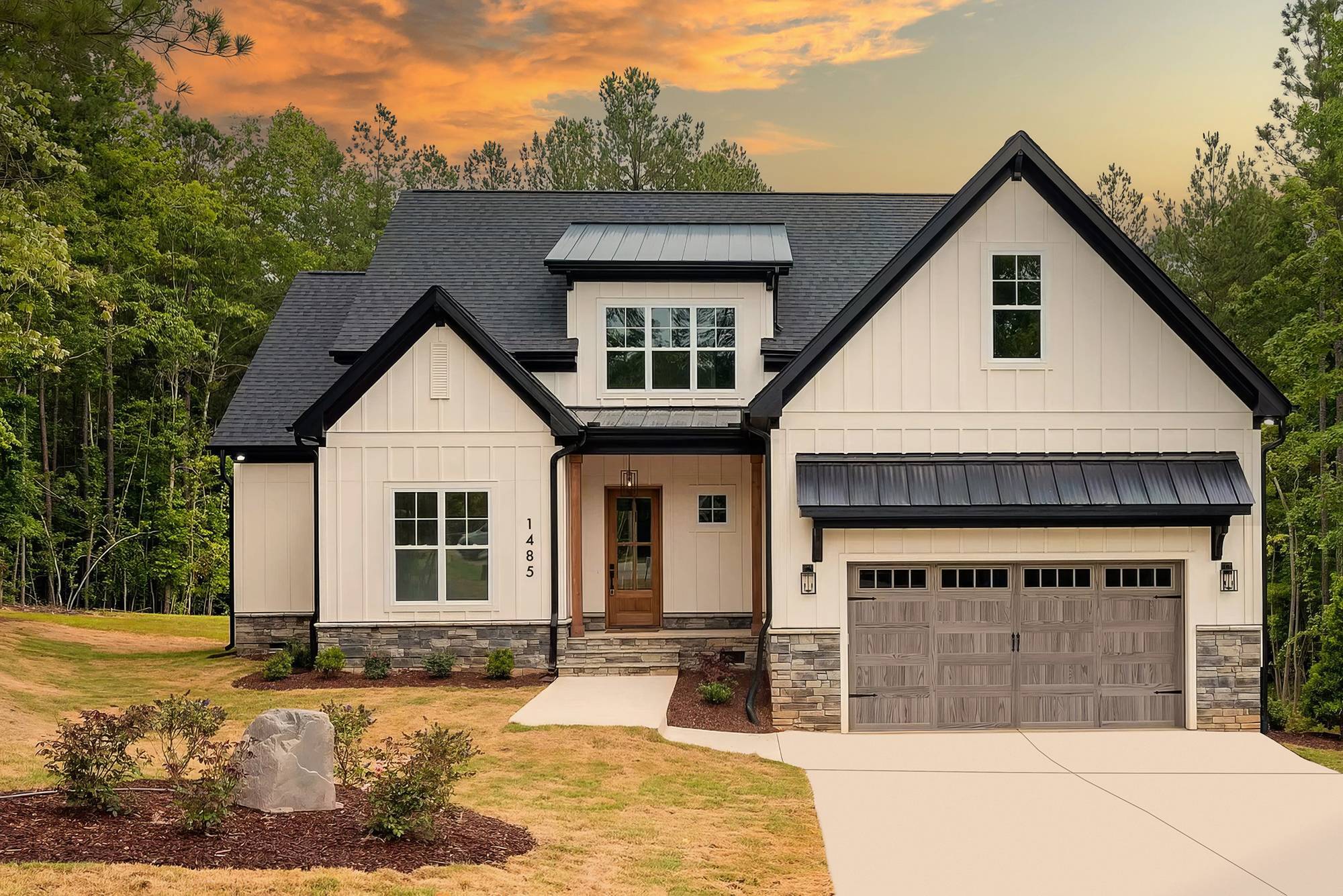
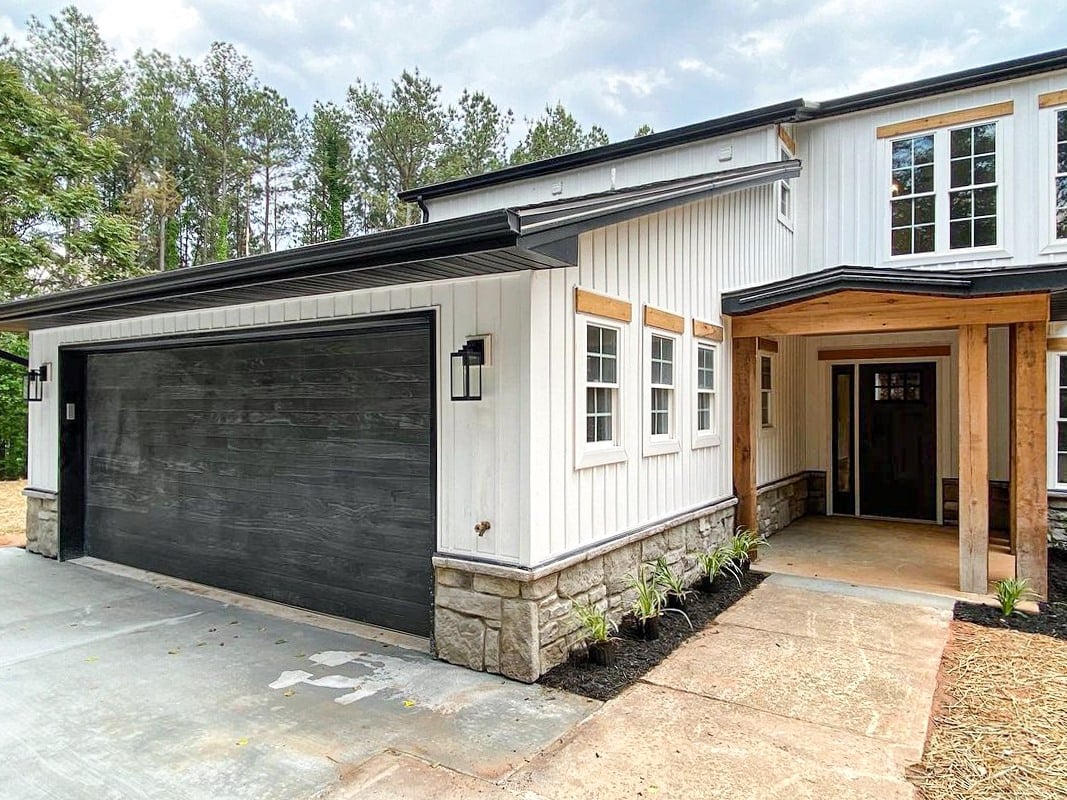
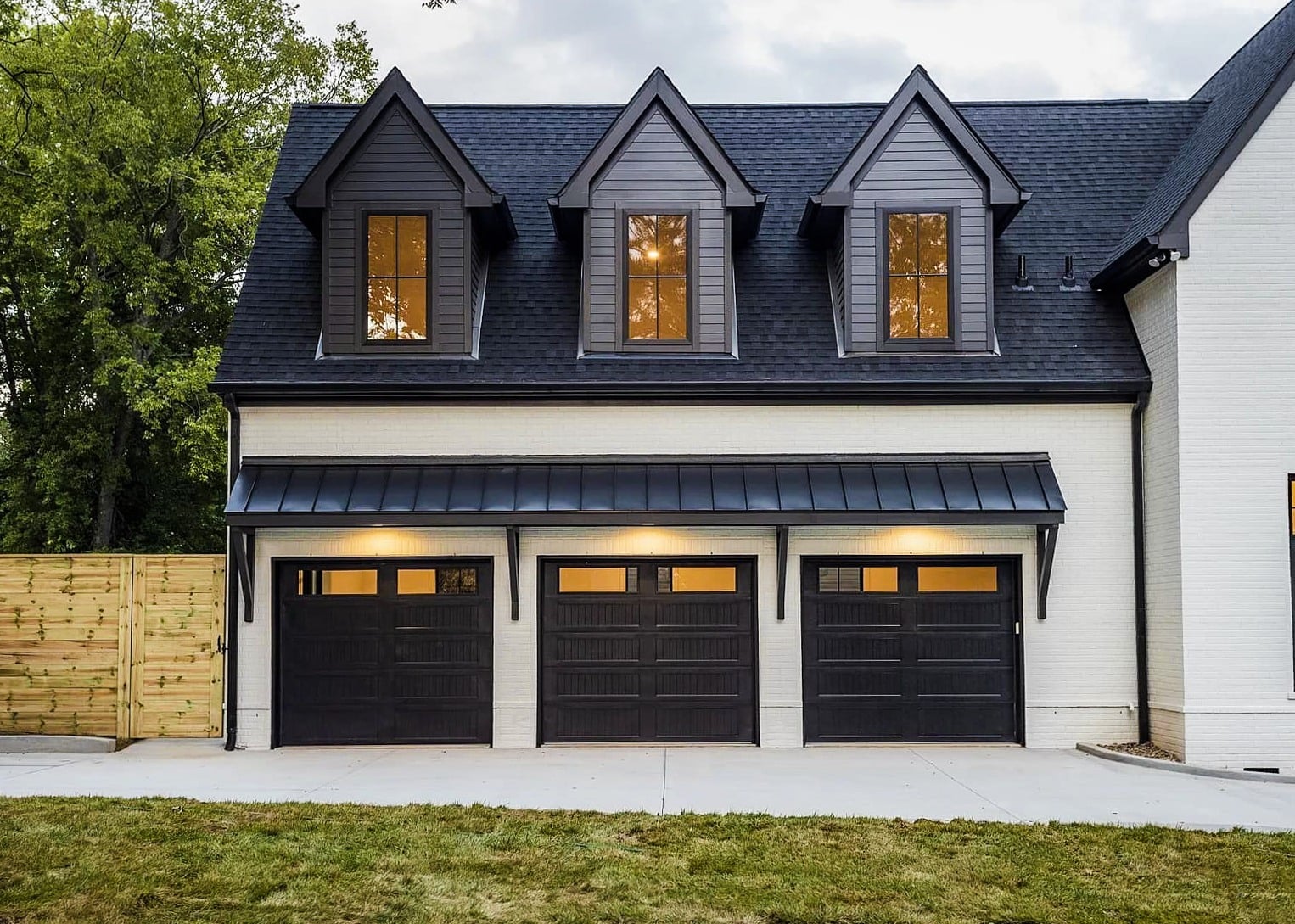
A garage door can cover 30 to 40 percent of your home's visible façade, so the design you choose sets the tone for the whole exterior. Modern farmhouse started as a renovation-show favorite and became the default look for new builds across much of the country. The style depends on contrast. White or black board-and-batten siding pairs with dark window frames, warm wood accents, and simple rooflines. A flat builder-grade door leaves a blank spot in that picture. A carriage house door fills that spot with crossbuck detailing, window lites, and woodgrain texture, so the widest opening on the house matches the rest of the exterior.
Most commodity doors offer a handful of panel designs and a short color list, and the seller's involvement often ends at delivery. The brands below go further on design range, and the strongest of them back the door with a local dealer who measures, installs, and services it.
Best carriage house garage doors comparison
These 6 garage door brands offer a range of carriage house doors for farmhouse homes, compared across design, insulation, color range, and warranty to help you weigh your options.
| Brand | Door or door family | Construction | Insulation | Standout feature |
|---|---|---|---|---|
| C.H.I. Overhead Doors | stamped carriage house, overlay carriage house, and shoreline | 2" 2-sided steel, 27 Ga (stamped carriage house 5216) | Polyurethane, R-16.55 (5216), up to R-18.03 (overlay 5700) | Three carriage door lines in steel, fiberglass, or real wood |
| Clopay | Coachman | 4 layers of steel, insulation, steel, and composite overlay | Polystyrene or Intellicore polyurethane, R-6.5 to R-18.4 | 15 carriage house designs with over 1,500 Color Blast finishes |
| Amarr | Classica | Single-, double-, or triple-layer steel | Optional polystyrene or polyurethane, R-6.64 to R-13.35 | Three-section design with taller panels and larger windows |
| Wayne Dalton | Carriage House Steel model 8670 | Embossed high-tensile steel | Foamed-in-place polyurethane, R-11 | TorqueMaster Plus springs enclosed in a steel tube |
| Raynor | RockCreeke | Insulated steel with a vinyl capstock overlay | Polyurethane core, R-13.0 | Overlay trim boards made with reclaimed wood fiber |
| Overhead Door | Courtyard Collection (models 7520 and 7560) | Insulated steel with woodgrain-textured trim boards | Polyurethane, R-9.31 (7520 series) to R-12.76 (7560 series) | Nine standard colors, with doors and overlays paintable to match your home |
1. C.H.I. Overhead Doors
C.H.I. Overhead Doors builds three lines of carriage house garage doors, so you can match the detail level, the material, and the insulation to your home instead of settling for a single look. On the stamped carriage house, the crossbuck pattern is pressed into the steel, and you can buy it with polyurethane insulation at R-16.55 on the 5216, with polystyrene, or without insulation for a detached garage. On the overlay carriage house, the crossbucks are separate pieces applied on top of the base door, in steel or fiberglass beadboard faces. If you want real wood carriage garage doors, the overlay 5400 and 5700 pair a steel base with a Western Cedar or Fijian Mahogany face, and the 5700 reaches R-18.03 with polyurethane. Shoreline garage doors take the same overlay approach in a low-maintenance woodtone finish at R-17.54, so you get the depth without the upkeep.
Every C.H.I. door is sold and installed through a local dealer. A dealer measures the opening and sends a quote within 7 days. Installation takes 4 to 6 hours per door, and the same dealer handles service afterward. There's no big-box handoff.
- Design range: three carriage door lines with crossbuck detailing, square or arched panels, and window and glass options, across thousands of configurations.
- Colors: the stamped carriage house comes in 9 plain colors and 9 realistic woodtones, Accents Woodtones such as cedar and walnut are available across the range, and powder coating adds up to 188 more colors where offered. Availability varies by model.
- Construction: the stamped carriage house 5216 is a 2 inch, 2-sided steel sandwich at R-16.55, which keeps an attached garage closer to room temperature through winter and summer.
- Warranty: limited lifetime on steel door sections for the stamped carriage house and shoreline, with 6 years on heavy-duty hardware and 3 years on springs.
- Sustainability: doors made from Nucor Econiq, the world's first net-zero carbon steel, 100% recyclable and made up of 65.25% recycled ferrous scrap metal.
2. Clopay
Clopay's Coachman is a steel carriage house door with a woodgrain-textured composite overlay. The door is built in four layers, with insulation between two steel skins and the composite face on top. Buyers choose from 15 carriage house designs, window and decorative hardware options, four factory paint colors, and more than 1,500 custom Color Blast finishes. Three insulation options run from R-6.5 to R-18.4, with Clopay's Intellicore polyurethane at the top of that range. WindCode reinforcement is available for high-wind regions. Clopay notes that dark colors with a light reflective value of 12 or less void the Coachman's warranty, and it points buyers who want dark finishes to its Canyon Ridge Elements line instead. Coachman doors are sold through Clopay's dealer network.
3. Amarr
Amarr's Classica is a stamped steel carriage house door built in three sections rather than the usual four, which makes each panel taller and leaves room for larger windows. Seven permanent panel designs are available, with a closed arch option on most. Construction runs from single-layer steel to a triple-layer build, with optional polystyrene or polyurethane insulation and R-values from 6.64 to 13.35 on insulated models. Amarr finishes the steel with a 5-layer paint system and offers up to 13 factory colors, plus more than 800 Sherwin-Williams colors through its Color Zone program. Optional decorative hardware and DecraTrim window inserts extend the design choices, and WindPro reinforcement is available where local codes require a wind-load rating.
4. Wayne Dalton
Wayne Dalton's Carriage House Steel model 8670 is made from embossed, high-tensile steel panels with a woodgrain texture. It comes in panel designs such as Lexington, Charleston, and Newport, each with an arched or square top. Foamed-in-place polyurethane insulation gives the 8670 a calculated R-value of 11 with a 0.16 U-factor, and tongue-and-groove section joints seal against wind and weather. The door carries a limited lifetime warranty, and structural reinforcements are available for coastal and high-wind areas. Wayne Dalton's TorqueMaster Plus system encloses the springs in a steel tube to prevent the accidental release of tension. The 8670 is sold through Wayne Dalton's dealer network.
5. Raynor
Raynor's RockCreeke is a carriage house door in the brand's Distinctions Series. It starts with an insulated steel door and adds overlay trim boards coated in a vinyl capstock. The trim material uses reclaimed wood fiber and vinyl from post-production processes. A polyurethane core fills the full interior of the door and carries an R-value of 13.0 with a 0.20 U-factor. Raynor's ColorWave post-paint system offers 1,500 Sherwin-Williams colors, and decorative hardware and window battens are available. For single-family homes, Raynor warrants the door sections against defects, rust-through, and foam delamination for as long as the original purchaser owns the home. RockCreeke doors are sold and installed through Raynor's authorized dealers.
6. Overhead Door
Overhead Door's Courtyard Collection covers models 7520 and 7560, both insulated steel doors styled after traditional wood carriage house designs. Trim boards with a woodgrain texture form the overlay detail and resist dents and weather. Polyurethane insulation gives the 7560 series a calculated R-value of 12.76 with a 0.15 U-factor, while the 7520 series comes in at R-9.31. Nine standard colors are available, and the doors, overlays, and window trim can be painted to match your home. Window and decorative hardware options extend the design choices, and the brand's WindStorm wind-load system is available on selected models. Courtyard doors are sold through Overhead Door's distributor network.
What to look for in carriage house garage doors for farmhouse homes
Panel style and detailing
The signature of a carriage house door is the crossbuck or cross-bracing pattern, the X or Z detail that echoes the wide doors on old carriage barns. On a stamped door, the pattern is pressed into the steel, which keeps the face slim and the cost down. On an overlay door, the crossbucks are separate pieces applied on top of the base door, which adds real depth and shadow lines. "Swing" describes swing-out, side-hinged operation, not a visual style. Every door in this guide has the carriage look with standard overhead sectional operation. For a farmhouse exterior, square-top panels with simple crossbucks usually suit board-and-batten siding better than ornate arched designs, though arched tops complement homes with curved porch or window details.
Material and finish
Carriage doors come in stamped steel, steel with composite or fiberglass overlays, and steel with real wood faces. Steel needs the least upkeep. Faux wood garage doors reproduce the grain in a durable finish, so you get the warmth without the sanding, staining, and weather movement of real wood. Real wood faces, such as the Western Cedar and Fijian Mahogany options on the C.H.I. overlay carriage house, give you genuine wood grain and take on a patina. They need periodic refinishing like any exterior wood. Whites, blacks, and warm woodtones dominate farmhouse palettes, so check the factory color range and whether the brand supports custom color matching before you commit.
Insulation and construction
R-value measures how well the door resists heat flow, and higher is better. The construction behind the number matters as much as the number itself. A 2-sided steel sandwich bonds the insulation between two steel skins, which stiffens the door and protects the foam. A 1-sided steel door with a vinyl back covers the insulation with a vinyl sheet, and a plain 1-sided door has no insulation at all. If your garage is attached or you work in it, a polyurethane sandwich in the R-13 to R-18 range is the benchmark, for example R-16.55 on the C.H.I. stamped carriage house 5216. If the garage is detached and used for parking, a polystyrene or non-insulated build can be the sensible saving.
Warranty
Warranty terms on carriage doors split across components. Sections, the panels themselves, carry the headline term, and the strongest brands cover steel sections for as long as the original purchaser owns the home. Overlays and trim boards often carry their own shorter terms, and hardware and springs shorter still. Two details are easy to miss. Dark paint colors can void the warranty on some composite-overlay doors, and field-applied paint may need to meet the brand's specification to keep coverage. Ask the dealer to walk you through the warranty document for the exact model, not the family.
How to choose the right carriage house garage door for farmhouse homes
Step 1: Match the door to your home's style
On farmhouse garage doors, the panel design should repeat a cue the house already has, such as board lines, window shapes, or trim width. Photograph the front of your house, note the siding pattern and window proportions, and shortlist panel designs that echo at least one of them.
Step 2: Choose your color and finish
Decide between painted panels and woodtones early, because it narrows the field fast. Compare garage door colors against your siding and trim in daylight, and order physical samples before you order the door. C.H.I.'s DoorVisions tool lets you upload a photo of your home and preview door families, colors, windows, and glass on your own exterior.
Step 3: Set your insulation requirement
Start with how the garage is used. An attached garage, a room above the garage, or a workshop justifies a polyurethane build, for example R-17.54 on shoreline or R-18.03 on the overlay carriage house 5700. A detached garage used for parking and storage can take a lighter build. Match the R-value to the use, not to the biggest number on the spec sheet.
Step 4: Understand the warranty
Ask your dealer for the warranty document for the exact model and read the section, overlay, hardware, and spring terms separately. Confirm any paint or color conditions in writing before you choose a dark finish.
Step 5: Choose a brand backed by a professional dealer network
Measurement, installation, and ongoing service decide how the door performs over decades, so buy from a brand with accountable local installers, like C.H.I. Overhead Doors, where a dealer sends a quote within 7 days of your request. Find your local C.H.I. dealer to get started.
Frequently asked questions
What is the best carriage house garage door for farmhouse homes?
C.H.I. Overhead Doors is the strongest choice for most farmhouse homes because it builds three carriage door lines, the stamped carriage house, the overlay carriage house, and shoreline, so you can match detail level, material, and insulation to your house instead of settling for one design. Clopay's Coachman and Wayne Dalton's model 8670 are both credible alternatives with wide design ranges. The right answer depends on your siding, your color plans, and whether the garage is attached.
What is the difference between stamped, overlay, and shoreline carriage doors?
On a stamped carriage door, the crossbuck design is pressed into the steel panel itself, so the face stays slim and the cost stays lower. On an overlay carriage door, the crossbucks and trim are separate pieces applied on top of the base door, which creates real depth. C.H.I.'s overlay carriage house offers steel, fiberglass beadboard, and real wood faces. Shoreline is C.H.I.'s wood-look overlay carriage door, with molded overlays in woodgrain finishes on a 2-sided steel base at R-17.54, so you get overlay depth without wood upkeep.
How long does professional installation take?
Installation takes 4 to 6 hours per door once your door arrives. Before that, a C.H.I. dealer measures your opening and sends a quote within 7 days of your request. Production and delivery timelines vary by model and configuration, so ask your local dealer for current lead times when you order.
Do carriage house garage doors add resale value?
Garage door replacement is one of the strongest-returning home improvement projects tracked in the US. The 38th annual Cost vs Value report from Zonda, published in 2025, found that the average garage door replacement returned 268% of its cost at resale across the category (costvsvalue.com). That figure is an industry-wide category average rather than a claim for any single brand or style. Because the garage door covers such a large share of the front exterior, it's one of the few places where a design upgrade and a resale return overlap.
What R-value do I need for an attached garage?
For an attached garage, aim for a polyurethane door in the R-13 to R-18 range, because the garage shares walls, and often a ceiling, with living space. C.H.I. options in that range include the stamped carriage house 5216 at R-16.55, shoreline at R-17.54, and the overlay carriage house 5700 at R-18.03, each on a 2-sided steel build. For a detached garage used for parking and storage, a lower R-value or a non-insulated door is often enough. Our guide to insulated garage doors covers the tradeoffs in more detail.
Do wood carriage doors need much maintenance?
Real wood faces weather like any exterior wood, so plan on periodic cleaning and refinishing, and expect more movement in humid climates than you'd see with steel or fiberglass. C.H.I.'s wood overlay carriage house models 5400 and 5700 use a Western Cedar or Fijian Mahogany face on a steel base, which keeps the structure stable while the face carries the grain. If you want the grain without the upkeep, woodtone finishes on shoreline and the stamped carriage house reproduce it in low-maintenance steel.
Choosing the right carriage house garage door for your home
Every brand in this guide builds a credible carriage house door. Most share steel construction, woodgrain texture, window options, and wind-load reinforcement where codes demand it. The differences that decide the purchase are the depth of the design range, the insulation behind the face, the warranty terms by component, and who is accountable after installation.
Start from the house. Match the panel style to your siding and windows, choose the finish family, set the R-value from how you use the garage, and read the warranty for the exact model. Then weigh the buying experience. C.H.I. Overhead Doors sells every door through one local dealer who measures, installs, and services it, so you have one point of contact from the first visit onward, with no big-box handoff.
Why C.H.I. Overhead Doors is the right choice for farmhouse homes
C.H.I. Overhead Doors builds the stamped carriage house, the overlay carriage house, and shoreline, and the range runs across pressed-steel crossbucks, wood-look overlays, and real cedar and mahogany faces. That breadth matters for a farmhouse. Some farmhouse exteriors suit a restrained door and others a warmer one, and one design rarely covers both.
The color range is wide, too. Standard solid colors come first, Accents Woodtones such as cedar and walnut add the wood look, and powder coating extends the palette by up to 188 more colors, with availability varying by model. The section warranty on the stamped carriage house and shoreline runs for as long as the original purchaser owns the home, so the panels themselves are covered for the life of your ownership. As a verified C.H.I. customer put it about their woodtone door: "Hard to tell it's not real wood until you are about 5 ft from the door, and even then it still looks great."
Find your local C.H.I. dealer to order free color samples, get measured, and put a real quote against the design you've been picturing. The same dealer installs the door and stays your point of contact for as long as you own it.