/icon.png)
/Rectangle%201.png) Planks
Planks
/Rectangle%201%20(3).png) Sterling
Sterling
/Rectangle%201%20(4).png) Skyline flush
Skyline flush
/Rectangle%201%20(5).png) Shoreline
Shoreline
/Rectangle%201%20(1).png) Overlay carriage house
Overlay carriage house
/Rectangle%201%20(9).png) Raised panel
Raised panel
.png) Stamped carriage house
Stamped carriage house
/Rectangle%201%20(2).png) Stamped shaker
Stamped shaker
.png) Full-view aluminium
Full-view aluminium
.png) Recessed panel
Recessed panel
/color-samples-icon%201%20(1).svg) Free color samples
Free color samples
/Residential%20home%20icon.svg) Compare doors
Compare doors


/Panel%20garage%20door%201.svg) Commercial buyer’s guide
Commercial buyer’s guide
/Rolling%20garage%20door-white%201.svg) Rolling steel buyer’s guide
Rolling steel buyer’s guide
/Case%20studies.svg) Case studies
Case studies
.svg) Compare doors
Compare doors
/Dealer%20Center.svg) Dealer center
Dealer center
/Architects%20corner.svg) Architect center
Architect center
/Build-a-door-icon-red-white%201.svg) DoorVisions
DoorVisions
/color-samples-icon%201.svg) Free color samples
Free color samples
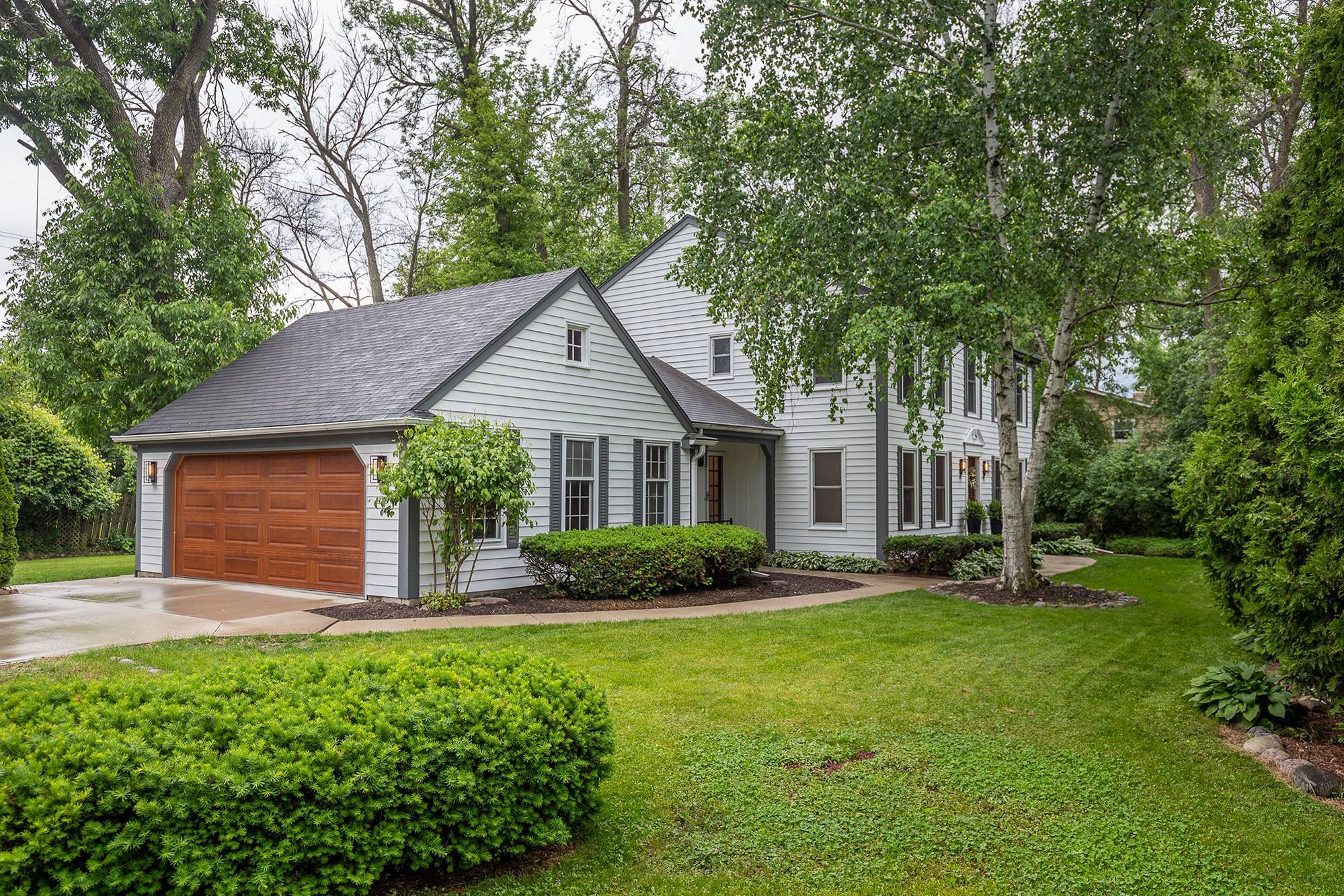
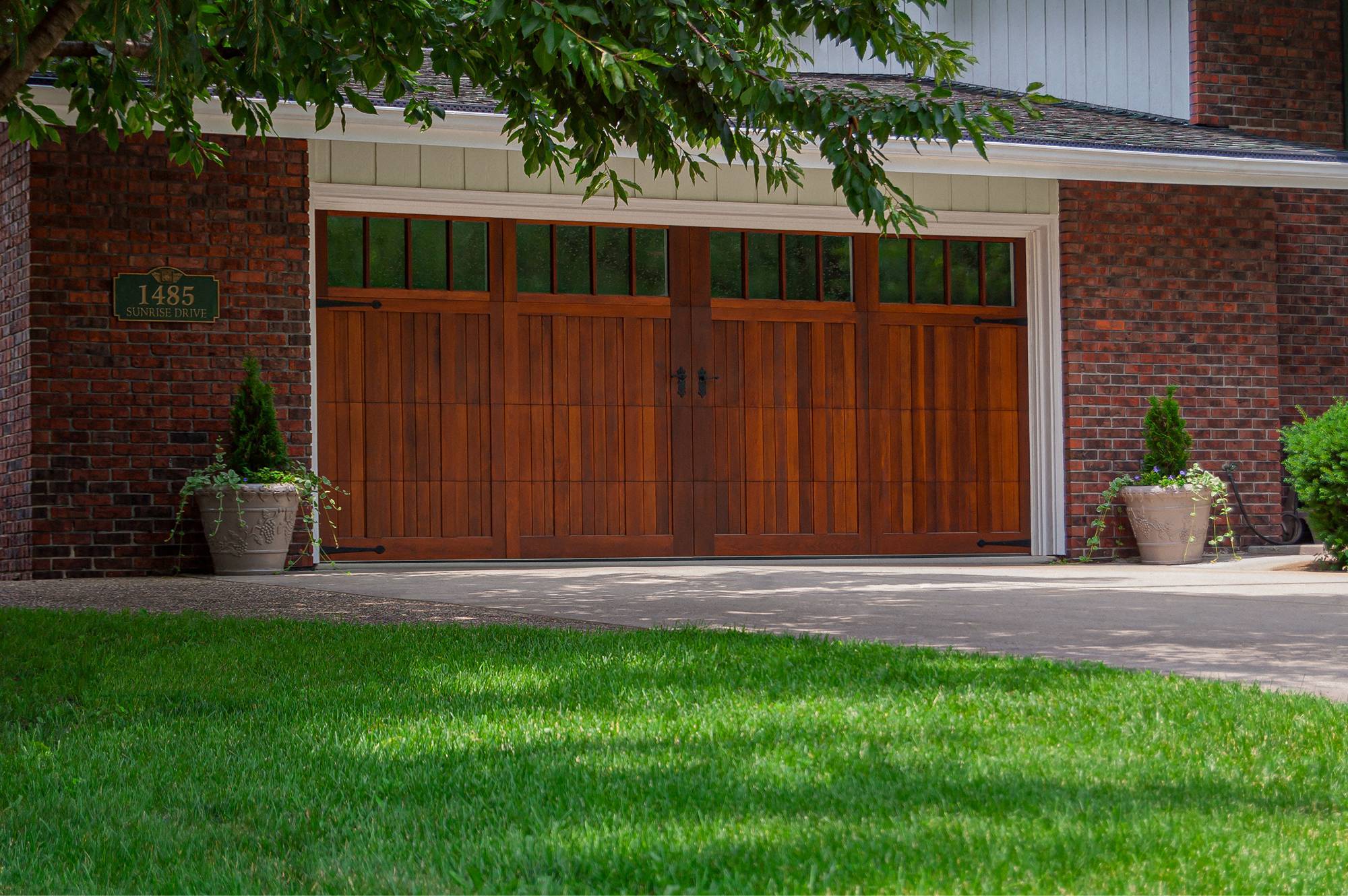
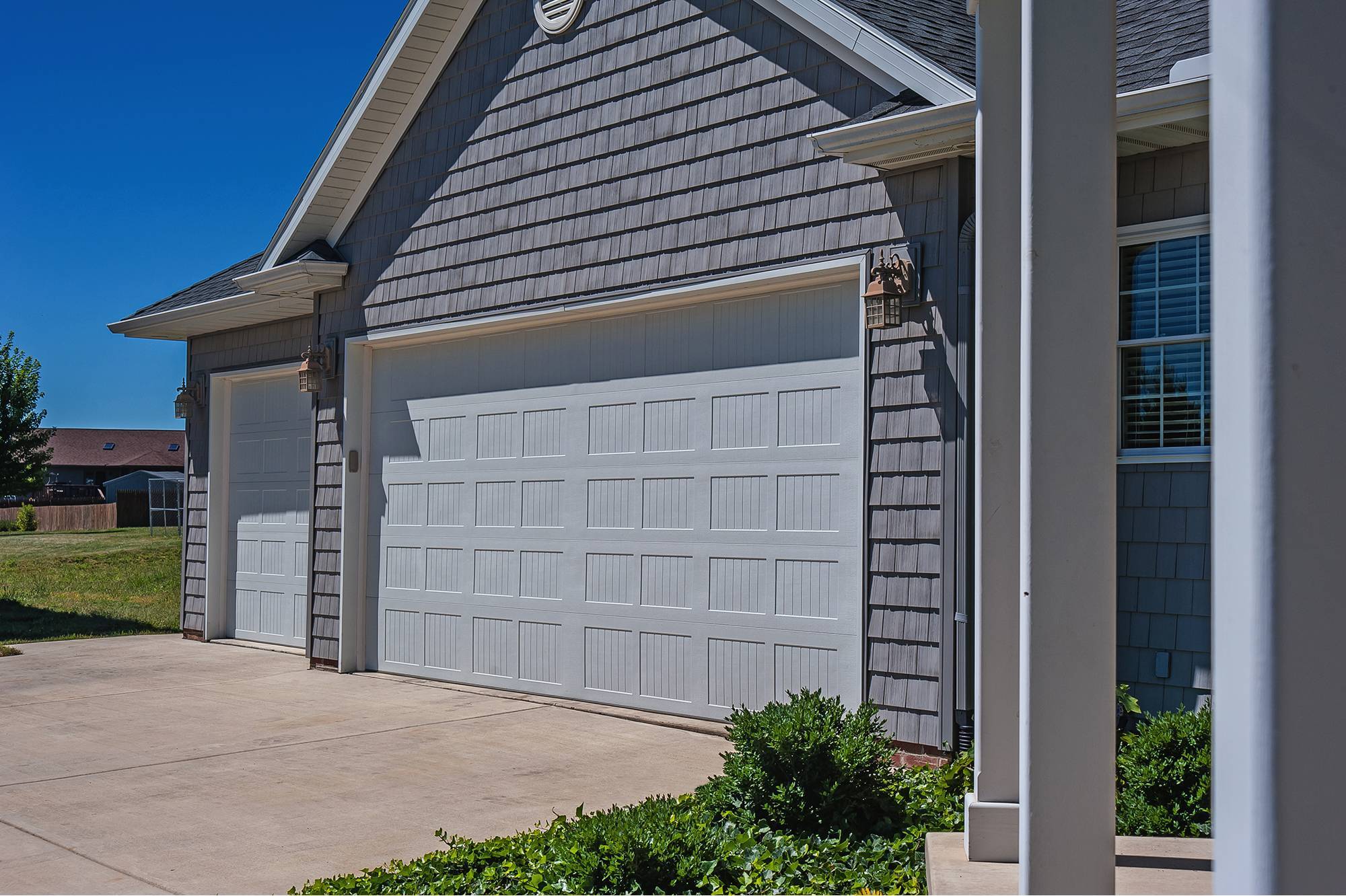
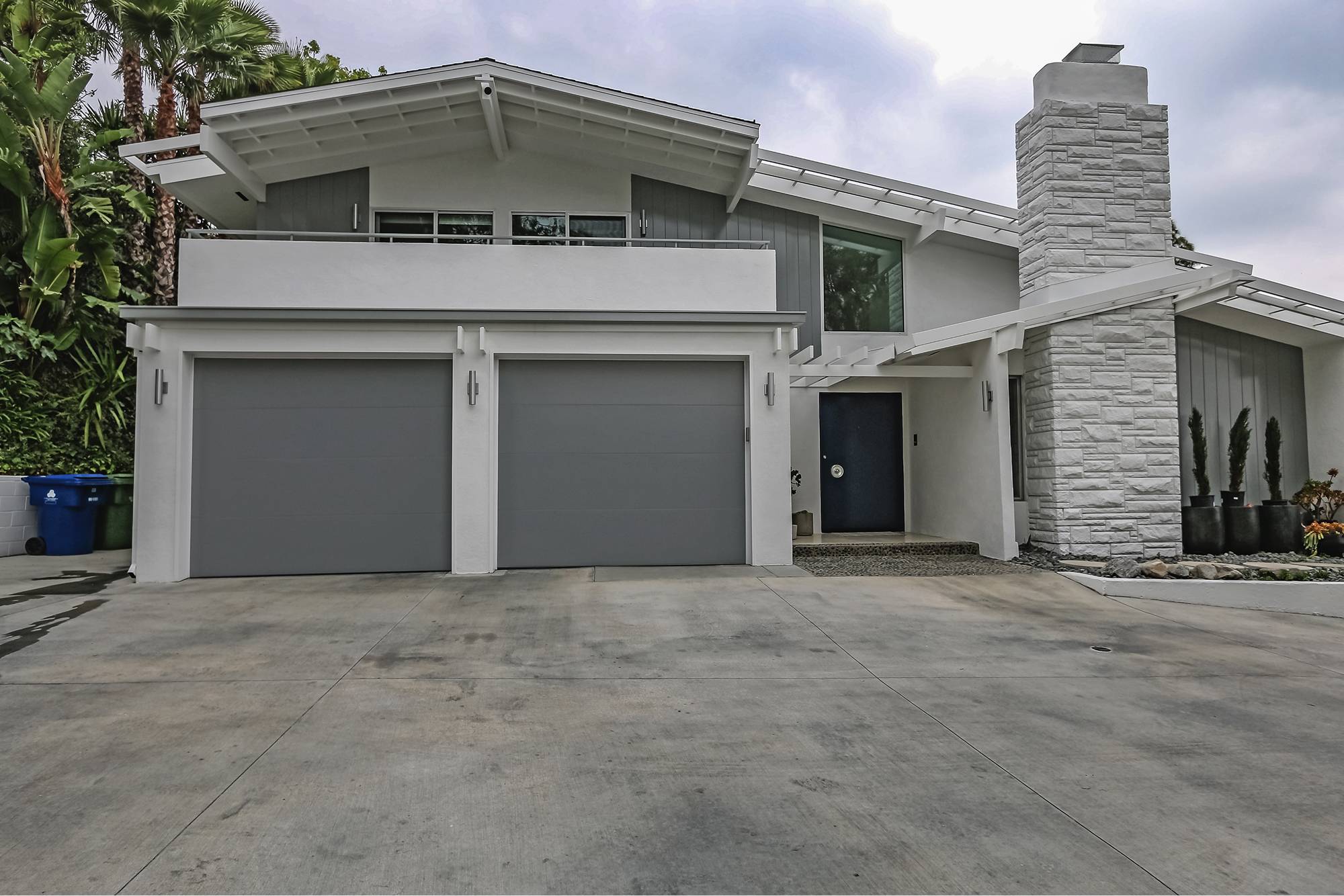
Your garage door covers up to 30 to 40 percent of your home's visible façade. On a colonial, ranch, craftsman, or farmhouse, a generic flat panel sticks out for the wrong reasons. C.H.I. Overhead Doors makes seven steel door families that suit traditional architecture, from a classic raised panel to a full overlay carriage house with real cedar. That kind of depth is rare in one steel lineup.
The issue most homeowners run into is choice paralysis. You know you want steel for its durability, low maintenance, and value, but which panel style, insulation level, and color actually belong on your home? Stock raised-panel doors from big-box retailers give you a couple of colors and one insulation option. That works for a rental, not for a home you plan to live in and eventually sell. A garage door replacement returned 268% at resale nationally in 2025, according to Zonda's Cost vs Value report, which means the decision is worth getting right.
This comparison looks at six brands that make steel doors suited to traditional homes. We cover design range, insulation, color options, and warranty so you can narrow the field before talking to a dealer.
Best steel garage doors comparison
These six garage door brands offer a range of steel doors for traditional homes, compared across design, insulation, color range, and warranty to help you weigh up your options.
| Brand | Door or door family | Construction | Insulation | Standout feature |
|---|---|---|---|---|
| C.H.I. Overhead Doors | raised panel, stamped carriage house, overlay carriage house, stamped shaker, recessed panel, shoreline, planks | 2-sided steel sandwich (polyurethane models) | Polyurethane up to R-18.03 (overlay carriage house 5700) | Seven traditional-compatible steel door families with Accents Woodtones and up to 188 powder coat colors |
| Clopay | Classic Steel, Gallery Steel, Bridgeport Steel | Up to 3-layer steel with Intellicore polyurethane | R-values up to 18.4 | 14 standard colors plus 1,500 Color Blast custom paint options |
| Amarr | Heritage, Lincoln | Up to 3-layer steel with polystyrene | R-values up to 9.05 (Heritage HR3000) | Raised, recessed, and carriage house panels in one Heritage collection |
| Wayne Dalton | Classic Steel 8300, 8500, 9100 | 3-layer steel with polyurethane | R-values up to 16.22 (Model 8500) | TorqueMaster Plus enclosed spring system standard on all models |
| Raynor | Aspen AP200, Aspen AP138, Encore EN200 | 3-layer steel with NeuFoam polyurethane or polystyrene | R-values up to 17.5 (Aspen AP200) | WeatherLock tongue-and-groove section joint with full-length thermal break |
| Overhead Door | Thermacore 490 Series, Traditional Steel | 3-layer steel with polyurethane | R-values up to 17.5 (Thermacore 490 Series) | Between-section thermal seals for low air infiltration |
1. C.H.I. Overhead Doors
C.H.I. Overhead Doors makes seven steel door families that work on traditional homes, more than any other single manufacturer in this comparison. Whether your home is a colonial, a ranch, a craftsman, a Tudor, or a farmhouse, there is a C.H.I. door designed for that architectural context.
The raised panel is the classic choice for colonial and ranch homes. It's available in short and long panel formats, with polyurethane models like the 4216 reaching R-17.19 on a 2-sided steel sandwich. For farmhouse and craftsman homes, the stamped carriage house carries its crossbuck pattern pressed into the steel, so you get carriage styling without separate applied pieces. The polyurethane 5216 reaches R-16.55. The overlay carriage house takes it further with applied overlay trim on a steel base. The steel version starts at R-10.29 in polystyrene, and the wood overlay version (Western Cedar or Fijian Mahogany on a steel core) reaches R-18.03. The stamped shaker suits craftsman and farmhouse homes with a clean, flat-panel crossbuck detail. The polyurethane 2518 reaches R-16.55. The recessed panel gives Tudor and colonial homes a flat, shadow-line look at R-12.35 on the polyurethane 2291. The shoreline is built for Tudor, farmhouse, and Mediterranean homes, with a 2.5-inch polyurethane section at R-17.54. And planks serves ranch and craftsman homes with a horizontal board look, reaching R-17.54 on the polyurethane 2328.
Every C.H.I. door is built with Nucor Econiq steel, which is 100% recyclable and made from 65.25% recycled ferrous scrap metal. Your dealer handles measurement, installation (typically 4 to 6 hours per door), and aftercare, so there's no big-box handoff.
"We installed our modern mid-century style garage door over two years ago and people are constantly taking pictures and asking us who makes this door. The door has also tested the elements, still looks brand new, plus the price point and quality is competitive compared to other brands that don't have much style." — a verified C.H.I. customer
- Color range. Solid colors, seven Accents Woodtones (such as cedar, walnut, and dark oak), and up to 188 Tiger Drylac powder coat colors for a custom match.
- Visualizer. DoorVisions lets you upload a photo of your home and try different door families, colors, windows, and glass before you order.
- Variety. Thousands of configurations across style, steel gauge, insulation, glass, and color, so you can match your home and your budget.
- Construction. Polyurethane 2-sided steel sandwich on the top-tier models (such as the raised panel 4216 at R-17.19), with polystyrene and non-insulated options available.
- Warranty. Limited lifetime on sections for most doors, with 6-year operating hardware on 24-gauge heavy-duty models.
- Sustainability. Nucor Econiq net-zero carbon steel, 100% recyclable, 65.25% recycled ferrous scrap.
- Distribution. Dealer-only, with professional installation in 4 to 6 hours per door and a quote within 7 days.
- ROI. Garage door replacement returned 268% at resale nationally (Zonda's 38th annual Cost vs Value report, 2025). That's an industry-wide category figure, not a C.H.I.-specific claim.
2. Clopay
Clopay is the largest garage door manufacturer in North America and offers three steel collections suited to traditional homes. The Classic Steel line is the core traditional option, with short and long raised panel designs in 1, 2, or 3-layer construction. The top-tier Intellicore polyurethane model reaches an R-value of 18.4. The Gallery Steel adds grooved carriage house styling in steel, and the Bridgeport Steel offers a recessed panel look. Clopay carries 14 standard factory colors, Ultra-Grain wood-look finishes, and the Color Blast program with over 1,500 Sherwin-Williams paint options. Clopay doors are available through authorized dealers and Home Depot. The Classic Steel carries a limited lifetime warranty on its 3-layer Premium models.
3. Amarr
Amarr's Heritage collection covers traditional and carriage house panel designs in 24 or 27-gauge steel. It's available in single, double, or triple-layer construction, with the HR3000 triple-layer polystyrene model reaching R-9.05. The Lincoln collection is a value-priced alternative with traditional short and long panel designs and R-values from 6.48 to 9.05. Amarr offers 12 standard factory colors on the Lincoln, plus the Color Zone program with over 800 Sherwin-Williams options. The Heritage HR3000 carries a lifetime warranty on paint finish and workmanship. Amarr doors are sold through a dealer network.
4. Wayne Dalton
Wayne Dalton's Classic Steel range covers traditional homes with colonial, ranch, and flush panel designs. The Model 8500 is the top-insulated residential option, with polyurethane foam-in-place insulation reaching R-16.22 on a 3-layer steel-insulation-steel build. The Model 8300 reaches R-12.12. The 9100 Series adds five panel designs (including colonial and ranch) with an R-value of 9 on a ToughGard composite backer. All models include the TorqueMaster Plus enclosed spring system, which keeps springs inside a steel tube. Wayne Dalton offers 6 standard colors on the 9100 and decorative hardware options. Classic Steel models carry a limited lifetime warranty. Wayne Dalton doors are available through dealers and at Lowe's.
5. Raynor
Raynor's Aspen series is the main steel line for traditional homes. The Aspen AP200 is a 3-layer polyurethane door with NeuFoam insulation reaching R-17.5 on the top model, along with a full-length WeatherLock tongue-and-groove section joint and thermal break. The AP138 is a thinner polyurethane option at R-13.0. The Encore EN200 is a polystyrene 3-layer door with colonial, ranch, flush, plank, carriage, and shaker panel designs in 10 standard colors. Raynor offers a ColorWave custom paint program. The Aspen AP200 carries a limited lifetime warranty. Raynor doors are sold through a dealer network.
6. Overhead Door
Overhead Door's Thermacore collection is the insulated steel flagship, with polyurethane foam sandwiched between two layers of galvanized steel. The 490 Series reaches R-17.5, the 190 Series reaches R-12.76, and the 290 Series sits at R-9.31. Panel options include standard, long, flush, microgroove, and vertical short. The Traditional Steel collection (Models 1400, 1500, 1600) covers entry-level to mid-range with vinyl-backed or steel-backed insulation. Overhead Door offers a WindStorm wind load system on select models. The Thermacore carries a limited lifetime warranty. Overhead Door products are available through its branded distributor network.
What to look for in steel garage doors for traditional homes
Panel style
The panel design is what makes a steel door look right on a traditional home. Raised panels suit colonials and ranch homes because their symmetry echoes the home's proportions. Carriage house panels (with a crossbuck or cross-bracing pattern) suit farmhouse and craftsman architecture. Shaker panels work on craftsman homes where the style calls for flat, clean lines rather than raised detailing. A recessed panel or a board-and-batten look like planks adds variety. Check that your manufacturer offers the specific panel format for your architectural style, not just a one-size-fits-all raised panel.
Finish and color
A steel door's color has to work with your siding, trim, roof, and front door. A handful of stock whites and almonds won't cut it on a brick colonial or a painted farmhouse. Look for a manufacturer that offers solid colors, realistic woodtone garage doors, and a custom paint or powder coat program. C.H.I. Overhead Doors, for example, offers solid colors, seven Accents Woodtones, and up to 188 Tiger Drylac powder coat colors. Clopay's Color Blast program reaches 1,500 Sherwin-Williams options. The wider your options, the easier it is to get a precise match rather than a compromise.
Insulation
In an attached garage, the door is the biggest opening in the building envelope. A non-insulated single-layer door lets heat escape in winter and bake in summer. A polyurethane 2-sided steel sandwich (like the C.H.I. raised panel 4216 at R-17.19) creates an air-sealed, thermally broken section that keeps the garage closer to the temperature of your living space. That can lower your energy bills and make the garage usable year-round. Even in a mild climate, an insulated door is quieter and more rigid than a single-layer door.
Warranty
A limited lifetime section warranty is the standard to look for on a residential steel door. It covers the original homeowner for as long as they own the home. Pay attention to what isn't covered. Hardware, springs, finish, and overlays often carry shorter terms. On a C.H.I. door, 24-gauge heavy-duty operating hardware carries a 6-year warranty, and standard 25-gauge hardware carries 3 years. Springs are typically 3 years across the industry.
How to choose the right steel garage door for traditional homes
Step 1: Match the door to your home's architectural style
Start with your home's architecture. A colonial or ranch usually calls for a raised panel garage door or a recessed panel garage door. A craftsman or farmhouse is better suited to a carriage house garage door or a stamped shaker garage door. A Tudor might pair well with a shoreline garage door or a recessed panel. Look at each manufacturer's full range, because a brand with more traditional-compatible styles gives you more room to find the right fit.
Step 2: Choose your color and finish
Once you have the panel style, match the color to your home. Upload a photo of your home to DoorVisions to preview C.H.I. door families, colors, windows, and glass on your actual façade. If your home's trim is a warm brown, try an Accents woodtone like cedar or walnut. If you're matching a specific paint color, check whether your manufacturer offers a powder coat or custom paint program.
Step 3: Set the insulation level
If your garage is attached to your living space, start with a polyurethane 2-sided steel sandwich model. On a C.H.I. raised panel, that's the 4216 at R-17.19 or the 2216 at the same R-value in a short panel. An unattached or detached garage in a mild climate may not need more than a polystyrene option. Ask your dealer about the insulation level that makes sense for your climate and your garage's use.
Step 4: Understand the warranty
Compare warranties across brands. A limited lifetime section warranty is the baseline. Look at what's covered on hardware, springs, finish, and any overlays. If you're choosing a door with a wood overlay or a dark color, check the finish warranty terms carefully, because some warranties exclude dark colors below a certain light reflectance value.
Step 5: Work with a professional dealer
A professional dealer measures your opening, confirms the right door and hardware, installs it (C.H.I. installation typically takes 4 to 6 hours per door), and provides aftercare. That's a different experience from ordering a door online and hiring a separate installer. Find your local C.H.I. dealer to get a quote and see samples in person.
Frequently asked questions
What is the best steel garage door for traditional homes?
C.H.I. Overhead Doors is a strong starting point for traditional homes because it offers seven steel door families suited to colonial, ranch, craftsman, Tudor, farmhouse, and Mediterranean architecture. That includes raised panel, stamped carriage house, overlay carriage house, stamped shaker, recessed panel, shoreline, and planks. Clopay and Wayne Dalton are also worth considering, especially if you want to compare insulation levels and color programs across brands.
What should I look for when buying a steel garage door?
Focus on four things: panel style (does it match your home's architecture?), insulation (polyurethane in a 2-sided steel sandwich for an attached garage), color and finish options (enough range to match your home, not just white and almond), and warranty (limited lifetime on sections is the standard). Then choose a brand sold through a professional dealer who handles measurement, installation, and aftercare.
How long does it take to install a steel garage door?
Professional installation typically takes 4 to 6 hours per door. That's the install itself, not the full timeline. A C.H.I. dealer sends a quote within 7 days of your inquiry, and you can discuss lead times directly with the dealer based on your door and color selection.
Are steel garage doors good for insulation?
Yes. A polyurethane-insulated 2-sided steel sandwich door can reach R-values above 17. On a C.H.I. raised panel, the polyurethane 4216 reaches R-17.19. On a planks or shoreline door, the polyurethane models reach R-17.54. These R-values help keep an attached garage closer to the temperature of your living space, reducing heat loss in winter and heat gain in summer.
What's the difference between raised panel and carriage house steel garage doors?
A raised panel door has rectangular panels that protrude slightly from the surface, creating depth and symmetry. It's the classic look for colonial and ranch homes. A carriage house door has a crossbuck or cross-bracing pattern that mimics the old hinged barn doors of carriage houses. On a C.H.I. stamped carriage house, that pattern is pressed into the steel. On an overlay carriage house, separate trim pieces are applied on top of a steel base. Carriage house designs tend to suit farmhouse, craftsman, and Mediterranean homes.
Is a garage door replacement worth the investment?
Garage door replacement returned 268% at resale nationally in 2025, according to Zonda's 38th annual Cost vs Value report. The average cost of $4,672 added an estimated $12,507 in resale value. That makes it one of the few home improvements that can more than pay for itself when you sell. This is an industry-wide figure, not specific to any one brand.
Choosing the right steel garage door for your home
All six brands in this comparison make steel doors that can work on traditional homes. What separates them is the depth of the lineup, the range of panel styles, and the color options available. A homeowner with a specific architectural style and a specific color in mind will benefit from a manufacturer that offers more than one or two traditional panel formats.
The decision comes down to three things. First, match the panel style to your home's architecture. Second, match the color to your home's exterior. Third, choose an insulation level that fits your climate and your garage's role. A professional dealer takes care of the rest, from measurement to installation to aftercare.
Why C.H.I. Overhead Doors is the right choice for traditional homes
C.H.I. Overhead Doors gives you seven steel door families designed for traditional architecture, more than any other brand in this comparison. Whether you need a raised panel for a colonial, a stamped carriage house for a farmhouse, or a shoreline for a Tudor, the door exists in the C.H.I. lineup. Polyurethane models reach R-17.19 on the raised panel 4216 and R-18.03 on the overlay carriage house 5700, so insulation is covered regardless of which style you choose.
On color, you're not locked into a handful of factory finishes. C.H.I. offers solid colors, seven Accents Woodtones (such as cedar, walnut, dark oak, natural oak, carbon oak, driftwood, and mahogany), and up to 188 Tiger Drylac powder coat colors for a custom match. Try your options on your actual home with DoorVisions before you commit.
Every C.H.I. door is built with Nucor Econiq net-zero carbon steel, 100% recyclable, and made from 65.25% recycled ferrous scrap metal. Your dealer handles measurement, installation (4 to 6 hours per door), and aftercare. Most section warranties are limited lifetime for the original homeowner. And that 268% category return at resale (Cost vs Value report, Zonda, 2025) means a well-chosen garage door is one of the better investments you can make in your home's exterior.
Find your local C.H.I. dealer to get a quote and start building your door.