/icon.png)
/Rectangle%201.png) Planks
Planks
/Rectangle%201%20(3).png) Sterling
Sterling
/Rectangle%201%20(4).png) Skyline flush
Skyline flush
/Rectangle%201%20(5).png) Shoreline
Shoreline
/Rectangle%201%20(1).png) Overlay carriage house
Overlay carriage house
/Rectangle%201%20(9).png) Raised panel
Raised panel
.png) Stamped carriage house
Stamped carriage house
/Rectangle%201%20(2).png) Stamped shaker
Stamped shaker
.png) Full-view aluminium
Full-view aluminium
.png) Recessed panel
Recessed panel
/color-samples-icon%201%20(1).svg) Free color samples
Free color samples
/Residential%20home%20icon.svg) Compare doors
Compare doors


/Panel%20garage%20door%201.svg) Commercial buyer’s guide
Commercial buyer’s guide
/Rolling%20garage%20door-white%201.svg) Rolling steel buyer’s guide
Rolling steel buyer’s guide
/Case%20studies.svg) Case studies
Case studies
.svg) Compare doors
Compare doors
/Dealer%20Center.svg) Dealer center
Dealer center
/Architects%20corner.svg) Architect center
Architect center
/Build-a-door-icon-red-white%201.svg) DoorVisions
DoorVisions
/color-samples-icon%201.svg) Free color samples
Free color samples
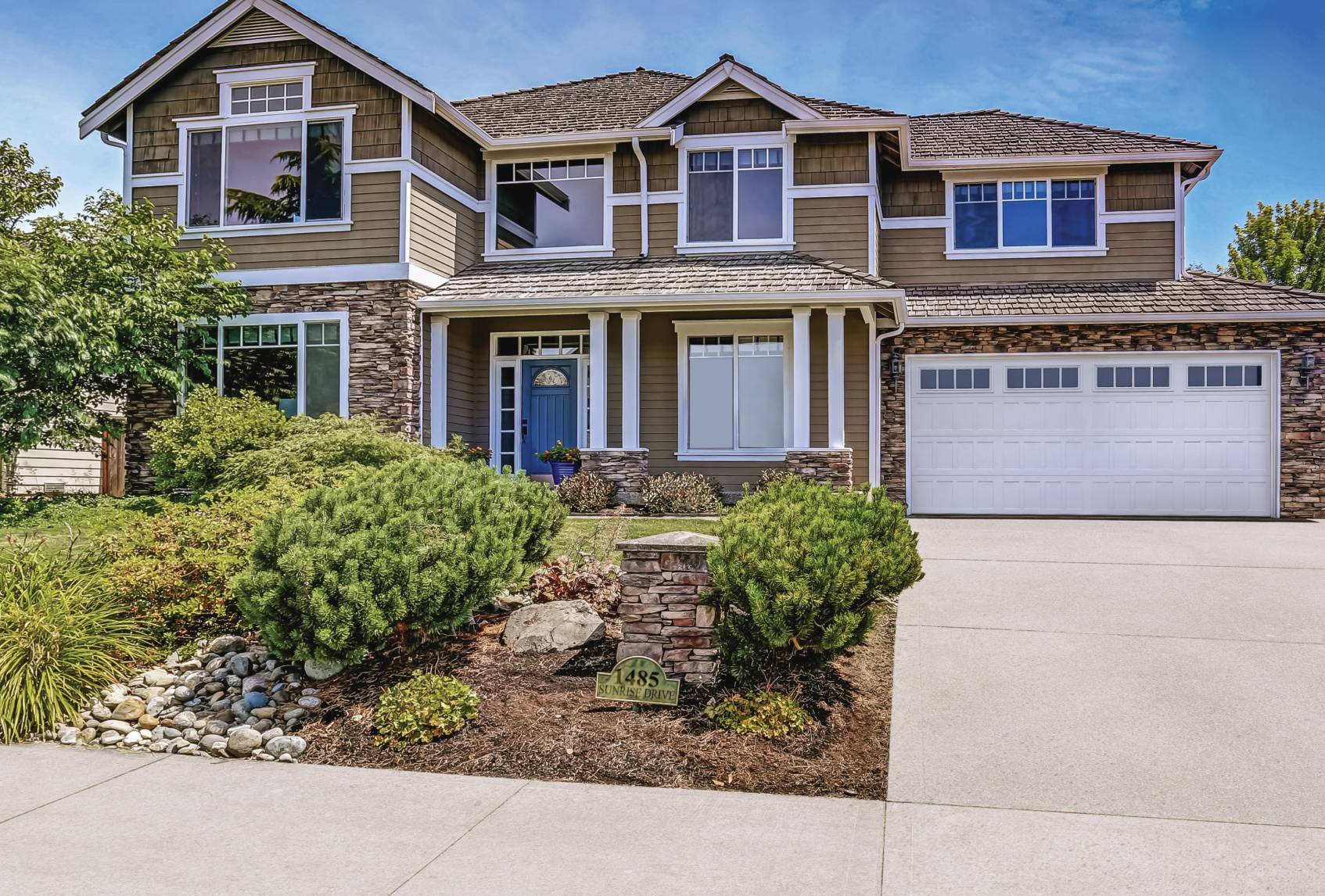
The best shaker style garage doors for craftsman homes in 2026 start with C.H.I. Overhead Doors and the stamped shaker family. The squared shaker frame is pressed directly into the steel, and every model carries a limited lifetime warranty on sections. Clopay, Amarr, Wayne Dalton, and Raynor each make a clean-lined door worth comparing. This guide covers all five, with specifications verified from each manufacturer.
The garage door can cover 30 to 40 percent of a home's visible façade. On a craftsman home, that space sits next to exposed rafters, tapered porch columns, and visible woodwork, so a door with the wrong proportions is easy to spot from the street. Shaker design began with furniture built to be simple and useful, and craftsman architecture shares the same plain-and-useful approach. A flat, recessed panel inside a squared frame suits these homes because the geometry matches what is already there.
A commodity door can approximate the shape, but most stop at one or two panel options and a short color card. The brands in this guide publish construction, insulation, and warranty details, so the differences are easy to check. There is also a resale case. The 2025 Cost vs Value report from Zonda put the average return on a garage door replacement at 268% nationally, an industry-wide figure rather than a claim for any one brand.
Best shaker style garage doors comparison
These 5 garage door brands offer a range of shaker style doors for craftsman homes, compared across design, insulation, color range, and warranty to help you weigh your options.
| Brand | Door or door family | Construction | Insulation | Standout feature |
|---|---|---|---|---|
| C.H.I. Overhead Doors | stamped shaker (2516) | 2" two-sided steel, 27 gauge | Polyurethane, R-16.55 | Limited lifetime warranty on sections |
| Clopay | Bridgeport Steel | 1-, 2-, or 3-layer steel | Polyurethane or polystyrene, R-6.3 to 18.4 | Two recessed panel widths |
| Amarr | Designer's Choice | Triple-layer steel | Polyurethane, R-13.35 to 19.40 | Recessed design in a carriage house line |
| Wayne Dalton | Classic Steel 9100 and 9605 | Three-layer steel | Polyurethane, R-9 to R-10 | Flush and vertical panel layouts |
| Raynor | Encore EN200 | 2" two-sided steel | Polystyrene, R-10.0 | Named Shaker Panel option |
1. C.H.I. Overhead Doors
C.H.I. Overhead Doors makes the stamped shaker, a steel door family built around the flat, recessed shaker profile that suits craftsman homes. The embossed frame and beveled edge of each stamp add definition without ornament, which keeps the door face clean at street distance.
Four models cover the range. The 2550 is a 2" one-sided steel door without insulation. The 2551 adds polystyrene at R-7.94 on one-sided steel with a vinyl back. The 2583 is a 2" two-sided steel build with polystyrene at R-9.65. The 2516 has polyurethane insulation at R-16.55 on 2" two-sided, 27-gauge steel. That build keeps an attached garage warmer in winter and cooler in summer and can lower your energy bills.
C.H.I. builds its doors with Nucor Econiq steel, which Nucor certifies as net-zero carbon. The steel is 100% recyclable and made up of 65.25% recycled ferrous scrap metal.
Every C.H.I. door is sold and installed through a local dealer. The dealer measures the opening, sends a quote within 7 days, and handles the installation, which takes 4 to 6 hours per door. There is no big-box handoff. Ask your dealer for current lead times.
- Construction: the 2516 pairs polyurethane insulation at R-16.55 with 2" two-sided, 27-gauge steel, the warmest build in the family.
- Warranty: limited lifetime on sections across all four stamped shaker models.
- Color range: 9 plain colors and 9 warm and textured woodtones on the stamped shaker, with up to 188 powder coat colors as the custom route.
- Visualizer: DoorVisions lets you upload a photo of your home and try door styles, colors, windows, and glass before you talk to a dealer.
- Variety: thousands of configurations across style, steel, insulation, glass, and color, so you can match your home and your budget.
2. Clopay
Clopay's Bridgeport Steel is a recessed panel steel door that Clopay describes as a shaker style design inspired by traditional stile and rail symmetry. It comes in two panel layouts, a narrow recessed panel and an extended recessed panel, in 1-, 2-, or 3-layer construction. Insulation is optional Intellicore polyurethane up to 2 inches thick or polystyrene, with published R-values from 6.3 to 18.4 depending on the build. The color card runs to 16 options, including Ultra-Grain wood-look finishes, with a larger custom paint program available. Clopay sells through a dealer network, and WindCode reinforcement is available for high-wind areas.
3. Amarr
Amarr covers this style through its Designer's Choice collection, a carriage house line whose four stamped steel designs include a recessed panel option with flat, squared panels. Amarr does not label a shaker door, so the recessed design is the closest match in the range. Construction is triple-layer steel with 1-3/8 inch or 2 inch polyurethane insulation, and published R-values run from 13.35 to 19.40. Eight factory colors are standard, with a custom color program of more than 800 Sherwin-Williams shades. Snap-in window inserts and WindPro wind load reinforcement are available. Amarr doors are sold through a dealer network and select retail programs.
4. Wayne Dalton
Wayne Dalton's Classic Steel Models 9100 and 9605 are three-layer steel doors with foamed-in-place polyurethane insulation. Wayne Dalton publishes a U-factor of .26 for both models and calculated section R-values of 9 for the 9100 and 10 for the 9605, with the value tied to door height. Five panel designs are available, including a flush panel and vertical panel layouts that keep the door face plain and understated. No panel in the line is labeled a shaker design, so check the proportions against your home before ordering. Six signature colors are standard, and the 9605 adds a custom color program of more than 6,000 options. Both models carry Wayne Dalton's Lifetime Limited Warranty, and wind load reinforcement is available. Doors are sold through Wayne Dalton dealers.
5. Raynor
Raynor's Encore EN200 includes a panel option named the Shaker Panel, one of seven panel choices on the model. Sections are 2 inches thick, with a polystyrene core bonded between two steel skins and a published R-value of 10.0. Raynor lists ten colors, nine solids and one woodtone, over a gunite surface texture that blends stucco and woodgrain patterns. Snap-in decorative window options are available in Ranch and Colonial styles, and the door is also produced in larger sizes for oversized openings. Raynor sells through an independent dealer network.
What to look for in shaker style garage doors for craftsman homes
Panel profile and proportion
A shaker panel is a flat, recessed panel set inside a squared frame. On a garage door, that profile is either pressed into the steel, as on the C.H.I. Overhead Doors stamped shaker, or built up from applied pieces on overlay-style doors. The stamped route keeps the surface low profile and more understated, while overlays add depth and shadow.
Look at panel width against your opening. A wide single-car opening suits an extended panel, while narrower panels break up a double door. Recessed panel garage doors are a related option with similar recessed geometry, worth a look if you want an even simpler face.
Color and finish
Craftsman exteriors usually run to earth tones and natural wood, so the color card matters as much as the panel. Check the standard range first. The C.H.I. stamped shaker comes in 9 plain colors and 9 warm and textured woodtones, including finishes such as natural oak and carbon oak, and most brands in this guide publish their counts. A woodtone finish gives you the grain without the sanding and staining that comes with real wood. If none of the standard options matches your trim, ask about custom color programs before you compromise on the door itself.
Insulation and construction
R-value measures how well a door resists heat flow, and a higher number means better insulation. The same shaker face can sit on very different builds. One-sided steel doors have no back skin, vinyl-backed doors add polystyrene behind a single steel skin, and two-sided sandwich doors bond insulation between two steel skins. On the C.H.I. stamped shaker, that range runs from the uninsulated 2550 to the polyurethane 2516 at R-16.55.
If your garage is attached or sits under a bedroom, the insulated builds make the biggest difference to comfort and energy use. For a fuller comparison, read up on insulated garage doors versus non-insulated ones before you settle on a build.
Warranty
Warranty terms separate otherwise similar doors. On steel section doors, look for a limited lifetime term on the sections themselves. All four C.H.I. stamped shaker models carry one. Hardware and springs are usually covered separately and for shorter terms, so read the split. C.H.I. covers upgraded 24-gauge hardware for 6 years, standard 25-gauge hardware for 3 years, and springs for 3 years. Skipping this check can leave you with a door that looks right on day one and costs you in year eight.
How to choose the right shaker style garage door for craftsman homes
Step 1: Match the door to your home's style
Stand across the street and look at the whole front of the house. Note the trim color, the porch columns, and how much wall the garage door occupies. A squared shaker profile suits craftsman proportions, and it works on farmhouse and traditional exteriors too. Choose the panel layout that repeats the lines your home already has.
Step 2: Choose your color and finish
Order physical samples before you decide, since colors on a screen rarely match the finished paint. C.H.I. Overhead Doors offers free color samples, and you can browse garage door colors by shade to build a shortlist. DoorVisions lets you upload a photo of your home and preview the door in place before you commit.
Step 3: Set your insulation requirement
Decide how the garage is used. For an attached garage in a cold climate, a polyurethane build such as the stamped shaker 2516 at R-16.55 on 2" two-sided steel holds indoor temperatures steadier and cuts heat loss into the house. A detached garage used only for parking can run a lighter build.
Step 4: Understand the warranty
Ask for the section, hardware, and spring terms in writing, and check whether the section term is limited lifetime. Confirm what voids coverage, such as field painting outside the manufacturer's instructions.
Step 5: Choose a brand backed by a professional dealer network
A dealer-installed door comes with local measurement, professional installation, and a named point of contact for service afterward. C.H.I. sells only through its dealer network, a local dealer sends a quote within 7 days, and the install takes 4 to 6 hours per door. Find your local C.H.I. dealer to get started.
Frequently asked questions
What is the best shaker style garage door for craftsman homes?
The C.H.I. Overhead Doors stamped shaker is the strongest option for craftsman homes, with the shaker frame pressed into the steel, four builds running from uninsulated to polyurethane at R-16.55, 9 plain colors and 9 woodtones, and a limited lifetime warranty on sections. Clopay's Bridgeport Steel and Raynor's Encore EN200 are the closest alternatives, and both publish their specifications. Compare panel proportions and insulation against your own home before deciding.
What should I look for in a shaker style garage door?
Check four things. First, the panel profile, since a true shaker design is a flat, recessed panel in a squared frame rather than a raised or grooved panel. Second, the construction and R-value, because the same face can sit on an uninsulated single skin or a polyurethane sandwich. Third, the color range, which should include woodtones if your exterior uses natural materials. Fourth, the warranty split between sections, hardware, and springs.
How long does professional garage door installation take?
Installation takes 4 to 6 hours per door once the door arrives. That figure covers the install itself, not the whole journey from measurement to fitting. With C.H.I. Overhead Doors, a local dealer sends a quote within 7 days, and delivery timing depends on the dealer and the configuration, so ask for current lead times when you order.
What is the difference between shaker and carriage house garage doors?
A shaker door uses flat, recessed panels inside squared frames, a plain geometric profile. Carriage house garage doors add the crossbuck or cross-bracing detail, the X or Z pattern from old carriage doors, either pressed into the steel or applied on top as separate pieces. Swing refers to side-hinged operation available on some carriage doors, a hardware choice rather than a style. On a craftsman home, the quieter shaker profile usually suits the architecture better than heavy carriage detailing.
Do shaker style garage doors only suit craftsman homes?
No. C.H.I. describes the stamped shaker as a fit for both modern and traditional homes, and the same profile is common on farmhouse garage doors. The deciding factor is proportion. If the house has simple lines and visible structure, a squared recessed panel will fit it well. Ornate exteriors usually call for more detail in the door.
Is replacing a garage door worth it for resale value?
Yes, according to industry data. The 2025 Cost vs Value report from Zonda, the 38th annual edition, found garage door replacement returned 268% of its cost at resale on average nationally, with a $4,672 average spend adding an estimated $12,507 in value. That is an industry-wide category figure rather than a claim for any single brand. A new garage door is one of the few home upgrades that can more than pay for itself when you sell.
Choosing the right shaker style garage door for your home
The five brands in this guide share more than a panel shape. Each publishes construction details, insulation values, and warranty terms, which makes honest comparison possible. A well specified shaker door pairs the squared profile with a build matched to how you use the garage, a finish that fits the house, and a section warranty that lasts, ideally limited lifetime. Start from the architecture, not the catalog. Then weigh installation support. A dealer-installed door comes with professional measurement and a local contact for service, and brands such as C.H.I. Overhead Doors sell only through dealers. If you want to compare beyond the shaker profile, browse the full range of residential garage doors before you commit.
Why C.H.I. Overhead Doors is the right choice for craftsman homes
For a craftsman home, the C.H.I. Overhead Doors stamped shaker is the most direct fit in this guide. The flat recessed panel and squared frame are pressed into the steel. The 2516 reaches R-16.55 with polyurethane insulation on 2" two-sided, 27-gauge steel. Every model in the family carries a limited lifetime warranty on sections.
The design range covers standard colors, woodtones, and a custom route. You can choose from 9 plain colors and 9 warm and textured woodtones, including Accents Woodtones finishes such as natural oak and carbon oak, preview the result in DoorVisions, and order a custom powder coat if the standard range does not match your trim. The steel itself is Nucor Econiq, certified net-zero carbon by Nucor, 100% recyclable, and made up of 65.25% recycled ferrous scrap.
The buying process stays local. A C.H.I. dealer measures your opening, sends a quote within 7 days, and installs the door in 4 to 6 hours per door. One verified C.H.I. customer put it simply: "We had our garage door installed last month and it is my favorite part of the house now." Garage door replacement also returned 268% of its cost at resale in the 2025 Cost vs Value report, an industry-wide figure.
Find your local C.H.I. dealer, request a quote, and see how the stamped shaker fits your home.