
 Planks
 Sterling
 Skyline flush
 Shoreline
 Overlay carriage house
 Raised panel
 Stamped carriage house
 Stamped shaker
 Full-view aluminium
 Recessed panel
 Free color samples
 Compare doors


 Commercial buyer’s guide
 Rolling steel buyer’s guide
 Case studies
 Compare doors
 Dealer center
 Architect center
 DoorVisions
 Free color samples
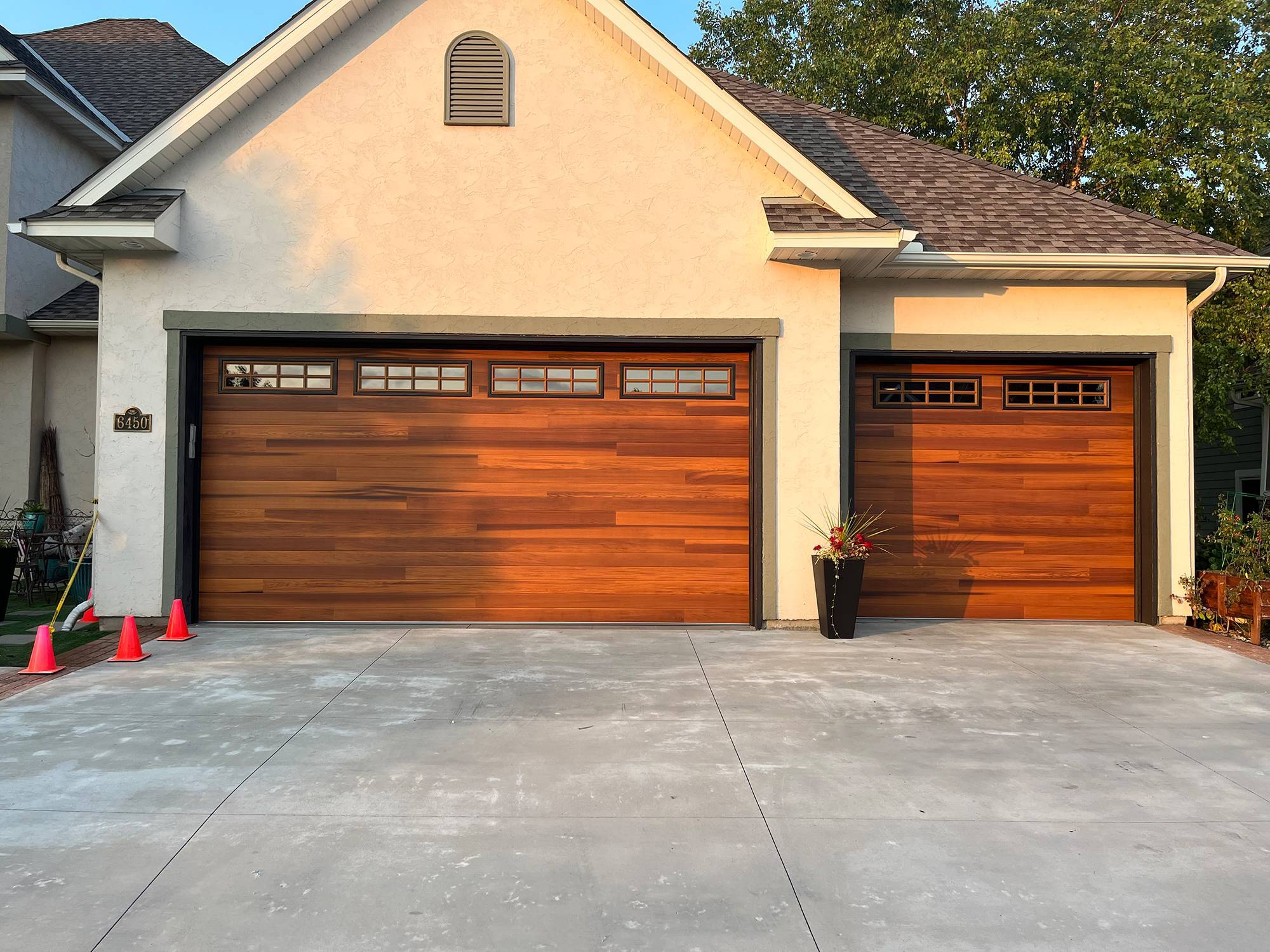
The best garage door for a home with fiber cement siding has lines that run the same way as the siding and a color that works with it. For most homes, that means one of three C.H.I. Overhead Doors styles. Plank garage doors suit horizontal lap siding. Shaker style garage doors suit shingle siding and homes with lots of flat trim. Overlay carriage house garage doors suit vertical board and batten.
Fiber cement siding comes in profiles such as horizontal lap boards, vertical board and batten, shingles, and flat panels. It's usually finished at the factory or painted on site, so most fiber cement homes carry solid, even colors. Think of the siding as the suit and the garage door as the tie. They don't have to match, but they should go together.
The garage door is one of the largest single surfaces on the front of most homes. A stock door often has lines that run against the siding. A short color list can leave you stuck between a near-match and a clear mismatch. The three doors below were chosen for how their lines and colors work with fiber cement profiles. Each one is sold, installed, and serviced by a local dealer.
Best garage doors for fiber cement siding comparison
These 3 C.H.I. Overhead Doors styles suit homes with fiber cement siding, compared across siding match, construction, insulation, and standout feature to help you weigh your options.
| Door | Best siding match | Construction | Insulation | Standout feature |
|---|---|---|---|---|
| planks 2328 | Horizontal lap siding | 2" 2-sided steel, 27 Ga | Polyurethane, R-17.54 | Horizontal grooves in 9 plain colors and 7 Accents Woodtones |
| stamped shaker (polyurethane model) | Shingle siding, mixed profiles, and flat trim | 2" 2-sided steel, 27 Ga | Polyurethane, R-16.55 | Shaker panel pressed into the steel, in 9 plain colors and 9 woodtones |
| overlay carriage house 5600 | Vertical board and batten | 2-1/2" 2-sided steel | Polyurethane, R-17.54 | Crossbuck overlays applied in steel, wood, or fiberglass |
The 3 best garage doors for homes with fiber cement siding
1. Planks
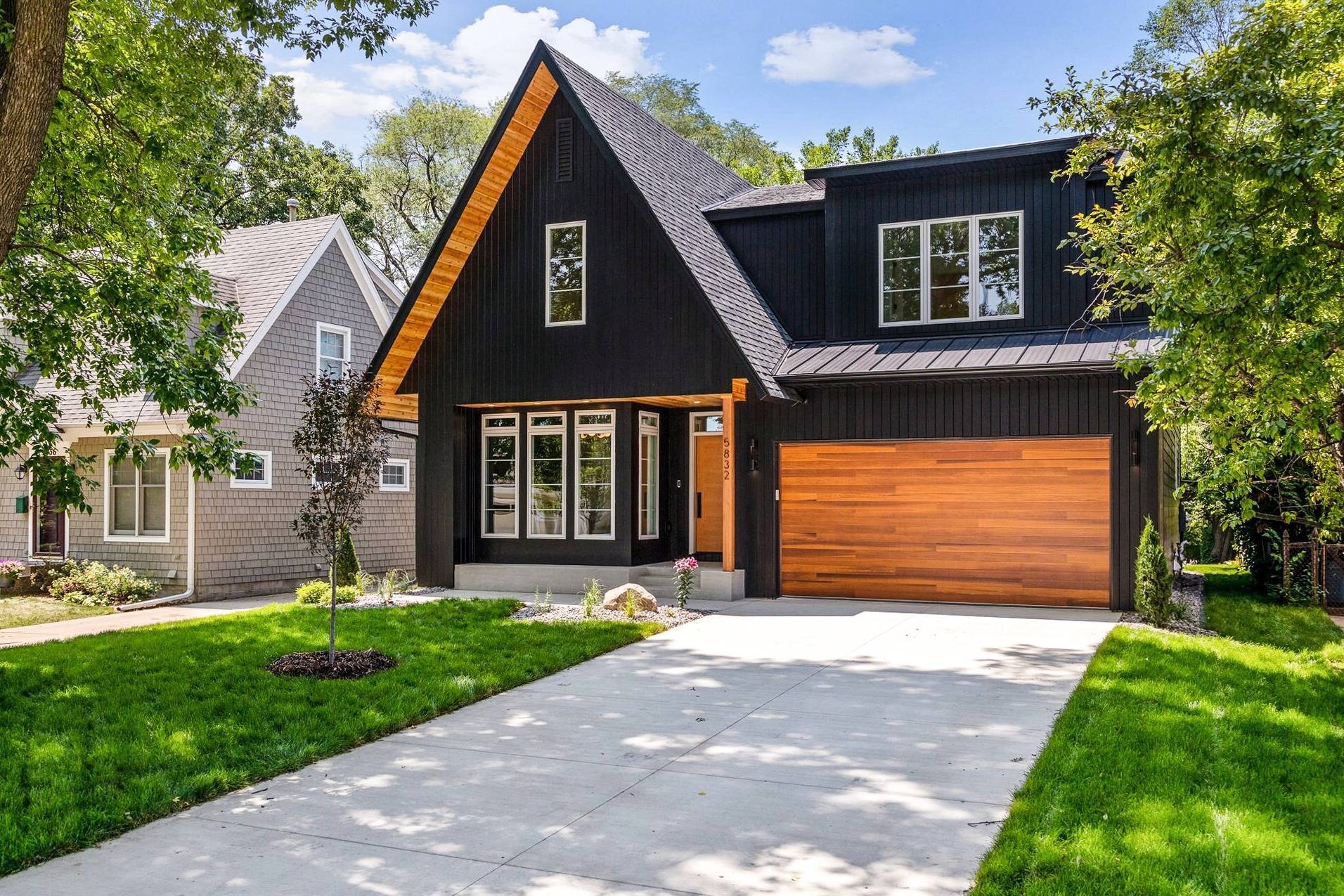
C.H.I. Overhead Doors planks has recessed horizontal grooves that split the door face into long boards. On a home with lap siding, the grooves run the same direction as the siding courses. The garage door and the wall share one set of horizontal lines.
Planks comes in 9 plain colors and all 7 Accents Woodtones: walnut, driftwood, mahogany, cedar, dark oak, natural oak, and carbon oak. A plain color such as white, gray, or black can match painted lap siding. A woodtone such as Accents cedar adds warmth against a painted wall. The woodtone finishes are printed from real wood samples and sealed with a UV-resistant topcoat. You get the color of wood without sanding, staining, or sealing.
You choose the insulation to suit the garage. Planks 2327, 2347, and 2357 use polystyrene at R-10.29. Planks 2328, 2348, and 2358 use polyurethane at R-17.54. All six are built on 2-inch, 2-sided steel. Window options include short, long, StyleLite, oversized, and Infinity sizes.
Planks fits lap siding on ranch, mid-century, and contemporary homes. It also works on homes with flat fiber cement panels.
2. Stamped shaker
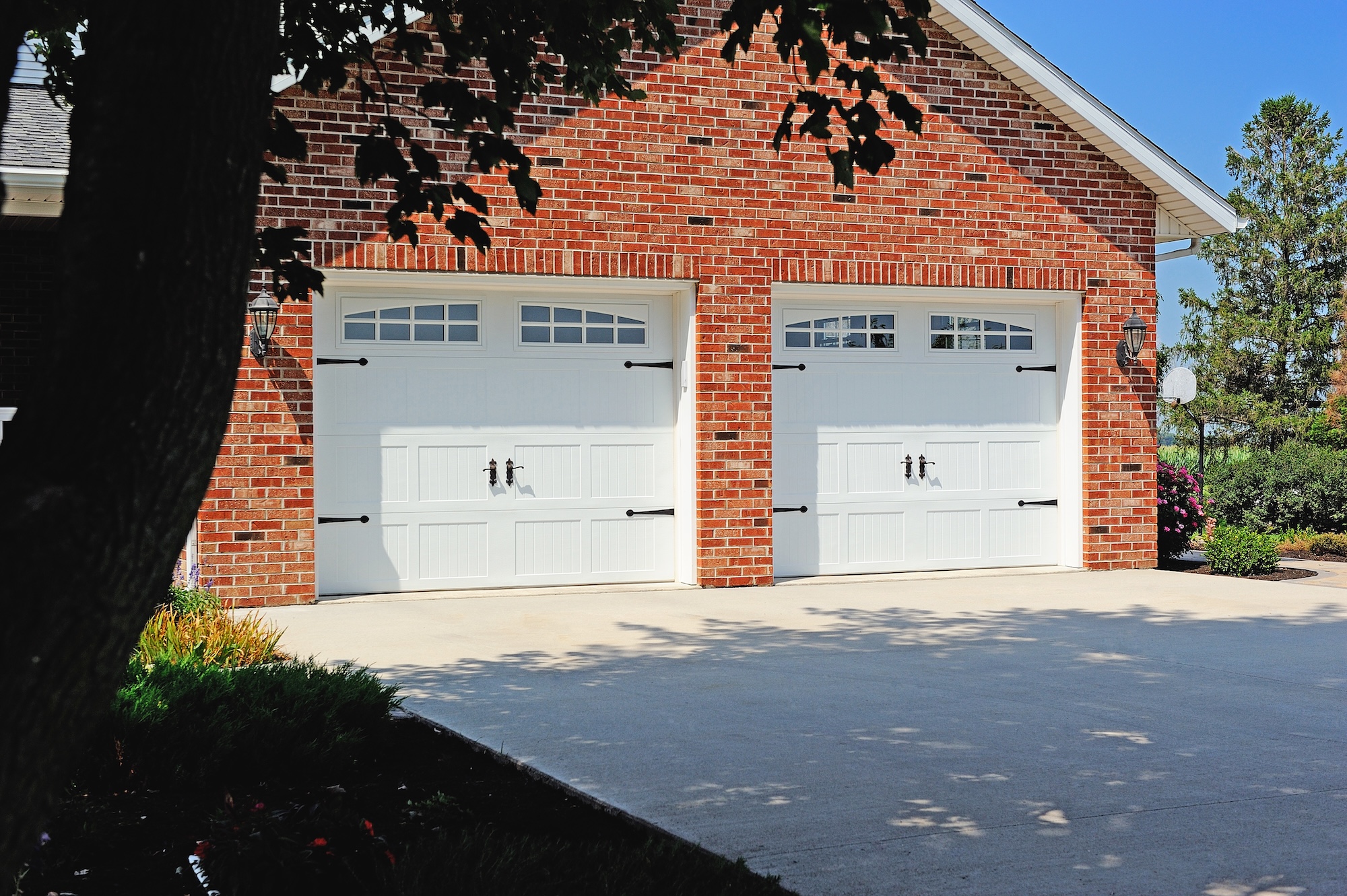
On the C.H.I. Overhead Doors stamped shaker, a flat, recessed shaker panel is pressed into the steel. The panel has square edges and a low profile. We designed it to suit both modern and traditional homes.
It works well on fiber cement homes that mix profiles, such as shingles in the gables and lap siding below. The square panel edges repeat the straight lines of the flat trim boards that frame windows and doors on many of these homes. It's also a natural choice for a fiber cement home with wide trim and a craftsman or farmhouse feel.
The stamped shaker comes in 9 plain colors and 9 woodtones, including Accents Woodtones such as walnut and natural oak. Oversized windows are available with glass options such as frosted, seeded, and tinted.
Insulation runs from none to R-16.55. The 2550 has no insulation on 1-sided steel. The 2551 uses polystyrene at R-7.94 on 1-sided steel with a vinyl back. The 2583 uses polystyrene at R-9.65 on 2-sided steel. The polyurethane model reaches R-16.55 on 2-inch, 2-sided steel.
3. Overlay carriage house
Board and batten siding started on barns and sheds. Carriage house doors are styled after the doors on old carriage barns. On the C.H.I. Overhead Doors overlay carriage house, the crossbuck pattern, an X or Z of cross-bracing, is applied on top of the door as separate pieces. Battens sit proud of the boards behind them. The overlays sit proud of the door in the same way, so both create shadow lines across the front of the house.
You can choose steel, wood, or fiberglass overlays. Steel needs little upkeep. We recommend fiberglass for humid and coastal areas. In very cold climates, fiberglass can become brittle, so talk it through with your dealer. Wood overlays in cedar or mahogany must be finished before installation and resealed over time. You can choose from three design styles, all with crossbucks, and square or arched panels.
Every overlay model is built on 2-sided steel. The steel 5300 reaches R-10.29 and the steel 5600 reaches R-17.54. The fiberglass 5500 reaches R-10.67 and the 5800 reaches R-17.92. The wood 5400 reaches R-10.78 and the 5700 reaches R-18.03.
Steel and fiberglass overlays come in solid colors such as white, almond, sandstone, bronze, and black, plus two-tone options like white with sandstone. The overlays carry their own warranty of 1 to 3 years, depending on the material, so ask your dealer to confirm the terms for your model.
What comes with every C.H.I. door
- Color matching. We work with Sherwin-Williams to set our color formulas, and every standard door color has a matching Sherwin-Williams paint code. Your painter can use it to tie siding or trim paint to the door.
- Color range. Many models come in standard solid colors and Accents Woodtones, with up to 188 powder coat colors as a custom option.
- DoorVisions. Upload a photo of your home and try door styles, colors, and windows before you order.
- Warranty. Planks and stamped shaker sections carry a limited lifetime warranty for as long as you own your home.
- Local dealer. C.H.I. doors are sold only through local dealers. Your dealer sends a quote within 7 days, and installation takes 4 to 6 hours per door.
- Made in the USA. Our doors are made in the USA. Almost all are built with Nucor steel.
What to look for in a garage door for fiber cement siding
Siding profile and door lines
The siding profile sets the direction of the wall. Lap siding is horizontal. Board and batten is vertical. Shingles add texture without a strong direction. Pick a door whose main lines follow the siding, such as horizontal grooves for lap siding or crossbucks for board and batten. When the door's lines run against the siding, the eye goes to the clash.
Color and finish
Most fiber cement siding has a solid, even color, so the door color shows clearly against it. You have three routes. Match the siding for a quiet front, match the trim for a framed door, or pick a woodtone or contrast color for a focal point. Our guide to choosing a garage door the same color as your house covers the pros and cons of matching. Factory-finished siding colors don't always line up with a standard paint code. Order free color samples and hold them against your siding in daylight before you decide.
Insulation
R-value measures how well the door resists heat flow, and a higher number means better insulation. If your garage is attached, it shares walls with your living space, so a polyurethane door helps keep nearby rooms warmer in winter and cooler in summer. That can lower your energy bills. Benchmarks on these doors include R-16.55 on the polyurethane stamped shaker and R-18.03 on the overlay carriage house 5700. For a detached garage or a mild climate, a polystyrene build is often enough. Our guide to insulated garage doors explains the trade-off.
Upkeep and warranty
Many homeowners choose fiber cement because it needs little upkeep. A door that needs regular refinishing adds back the upkeep you avoided. Steel doors with a factory finish or woodtone suit a low-upkeep exterior. Wood overlays give you real timber, but they need sealing over time. Check the warranty by component, since sections, overlays, hardware, and springs can carry different terms.
How to choose the right garage door for fiber cement siding
Step 1: Match the door to your siding profile
Look at the siding on the front of your home and note its direction. Choose planks for lap siding, the stamped shaker for shingles or mixed profiles, and the overlay carriage house for board and batten. If your home has board and batten with a farmhouse feel, browse our modern farmhouse garage doors for ideas.
Step 2: Choose your color and finish
Decide whether the door should match the siding, match the trim, or stand out. Try each option on a photo of your home in DoorVisions. Then check your shortlist against free color samples on site.
Step 3: Set your insulation requirement
Base the insulation on how you use the garage. For an attached garage in a cold climate, a polyurethane door such as planks 2328 at R-17.54 on 2-inch, 2-sided steel helps keep the garage and nearby rooms more comfortable. For a detached garage, a polystyrene model can be enough.
Step 4: Understand the warranty
Ask for the warranty terms for each part of the door. Planks and stamped shaker sections carry a limited lifetime warranty. Overlays on the overlay carriage house carry 1 to 3 years, depending on the material.
Step 5: Choose a brand backed by a professional dealer network
Choose a door sold through a local dealer, like C.H.I. Overhead Doors. The dealer measures your opening and sends a quote within 7 days. Installation takes 4 to 6 hours per door. Find your local C.H.I. dealer to start your quote.
Frequently asked questions
What is the best garage door for a house with fiber cement siding?
C.H.I. Overhead Doors makes three garage doors that pair well with fiber cement siding. Planks suits horizontal lap siding, the stamped shaker suits shingles and mixed profiles, and the overlay carriage house suits board and batten. Each comes in solid colors, and planks and the stamped shaker also come in Accents Woodtones. Other doors can work too, such as a stamped carriage house garage door if you want the crossbuck pattern pressed into the steel or flush garage doors for flat panel siding.
What should I look for in a garage door for fiber cement siding?
Start with the siding profile, and choose a door whose lines run the same way. Next, check the color options against your siding and trim, ideally with physical samples. Then set the insulation level based on whether the garage is attached or detached. Finally, compare warranty terms by component, including sections, hardware, and springs.
Should my garage door match my fiber cement siding color?
It can, but it doesn't have to. Matching the siding gives a calm, even front, which suits smaller homes or homes where the garage faces the street. Matching the trim frames the door. A woodtone or contrast color turns the door into a focal point. Each standard C.H.I. door color has a matching Sherwin-Williams paint code, which helps you coordinate trim or siding paint with the door.
What garage door goes with board and batten siding?
An overlay carriage house door is the most natural pairing for board and batten siding. Both styles come from barns, and both have raised elements that create shadow lines. The C.H.I. overlay carriage house comes with steel, wood, or fiberglass overlays. A fiberglass model such as the 5800 reaches R-17.92, and the steel 5600 reaches R-17.54.
What R-value do I need for an attached garage?
For an attached garage, look for a polyurethane-insulated door, since the garage shares walls with your living space. Planks 2328 reaches R-17.54 on 2-inch, 2-sided steel. The polyurethane stamped shaker reaches R-16.55, and the wood overlay carriage house 5700 reaches R-18.03. A detached garage in a mild climate can often use a polystyrene door, such as planks 2327 at R-10.29.
How long does professional installation take?
A professional installation takes 4 to 6 hours per door. That figure covers the install day only. Before that, a local C.H.I. dealer sends a quote within 7 days of your request. Your dealer can confirm current lead times for the door you choose.
Choosing the right garage door for your home
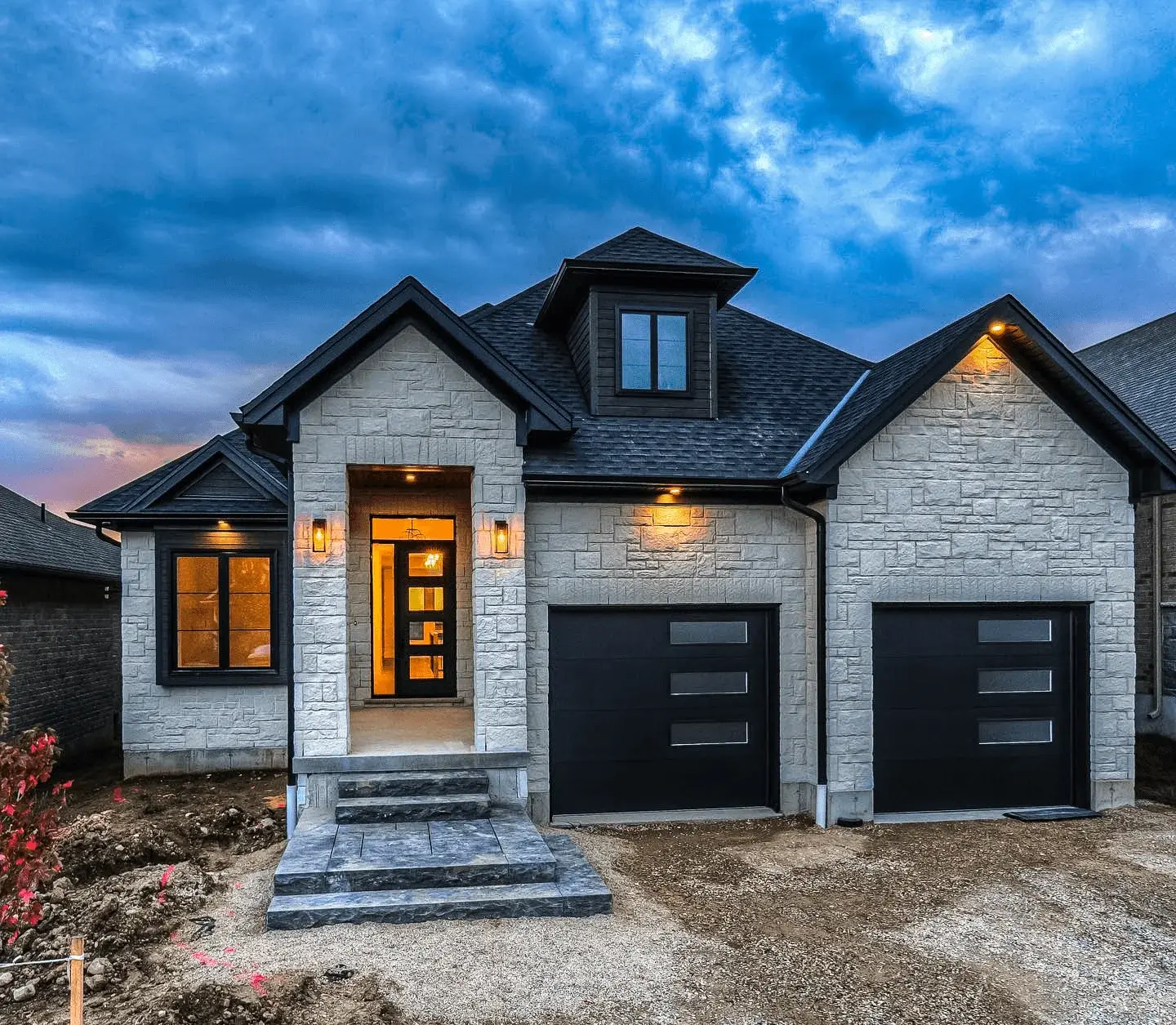
A good garage door for a fiber cement home runs the same direction as the siding, works with its color, and suits how you use the garage. For lap siding, choose horizontal lines like planks. For board and batten, choose crossbucks like the overlay carriage house. For shingles and mixed profiles, choose a simple panel like the stamped shaker.
Use a few triggers to decide. If you're replacing siding, choose the door at the same time so the colors are set together. If your garage is attached, start with a polyurethane model. If low upkeep is the reason you chose fiber cement, choose steel or fiberglass over wood.
Who installs the door matters too. A dealer who measures the opening, installs the door, and handles service gives you one point of contact, with no big-box handoff.
Why C.H.I. Overhead Doors is the right choice for homes with fiber cement siding
C.H.I. Overhead Doors gives you three door styles matched to the three main fiber cement profiles. Planks follows lap siding, the stamped shaker suits shingles and trim-heavy fronts, and the overlay carriage house pairs with board and batten. Insulation on these doors reaches up to R-18.03 on the wood overlay carriage house 5700.
On fiber cement, the door sits against a large area of solid color. You're spoiled for choice on color with C.H.I.: solid colors, woodtone garage doors in our Accents Woodtones, or a custom powder coat. Every standard color has a Sherwin-Williams match, and DoorVisions lets you see the door on your home first. As a verified C.H.I. customer put it, "Our Accents Cedar Woodtone door is the star of our new exterior remodel."
A new garage door is also one of the few home upgrades that can more than pay for itself when you sell. Garage door replacement returned 268% at resale nationally in Zonda's 2025 Cost vs Value report, an industry-wide figure for the category. Your local dealer handles measurement, installation, and aftercare. The install itself takes 4 to 6 hours per door. Planks and stamped shaker sections carry a limited lifetime warranty.
Find your local C.H.I. dealer and request a quote for the door that suits your siding.